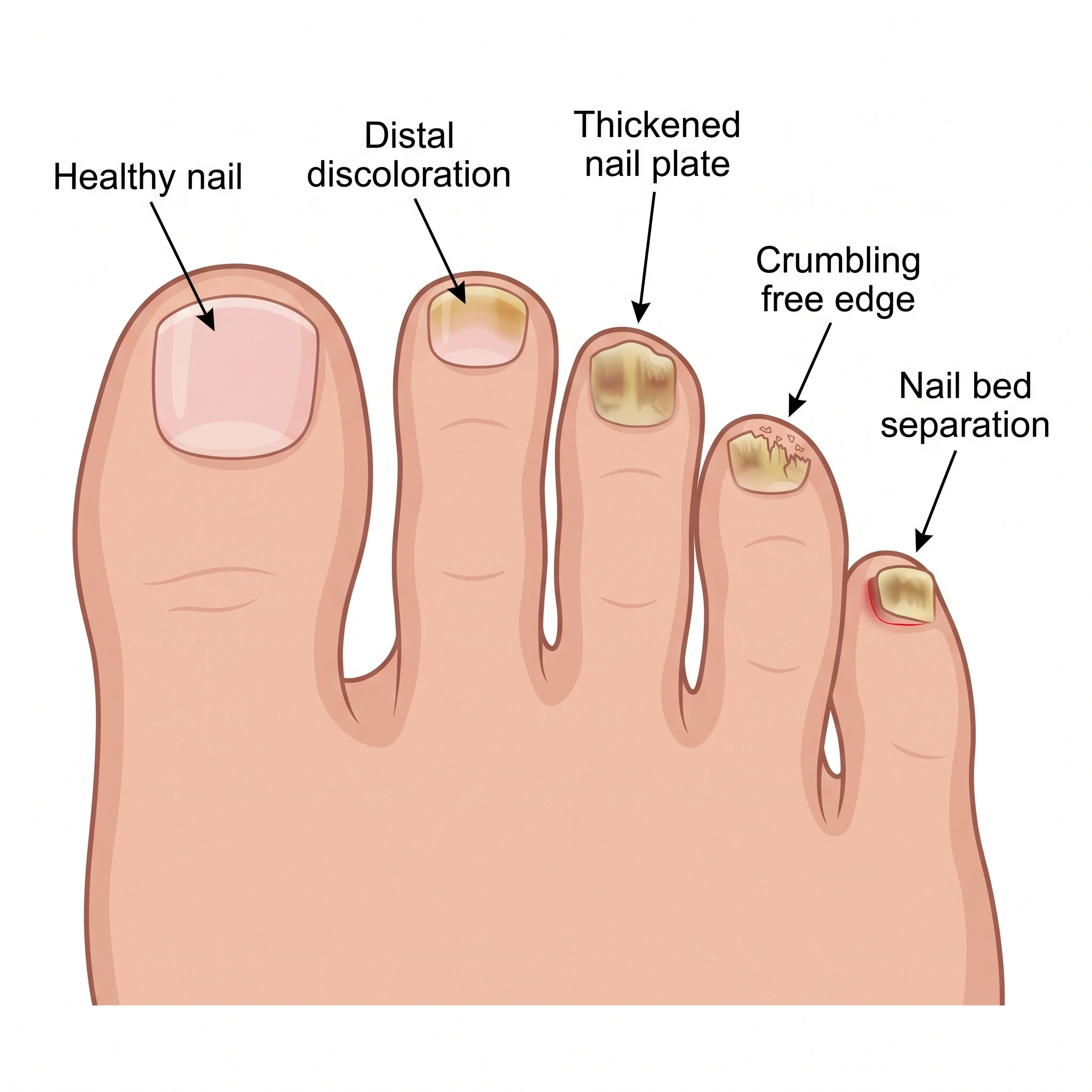
Athlete's foot is a fungal infection of the skin on the feet that causes itching, peeling, and cracking, most often between the toes. Dr. Tine treats athlete's foot in Fort Lauderdale, including stubborn and recurring cases, with antifungal medicine and the foot-care habits that keep it from returning.
Stephanie Tine diagnoses and treats athlete's foot in Fort Lauderdale, from the first visit through recovery.
What is athlete's foot?
Athlete's foot, called tinea pedis, is a fungal infection of the skin of the feet.
The fungus lives on damp floors and in shoes and grows in warm, moist skin. It is common in anyone whose feet stay damp, not only athletes.
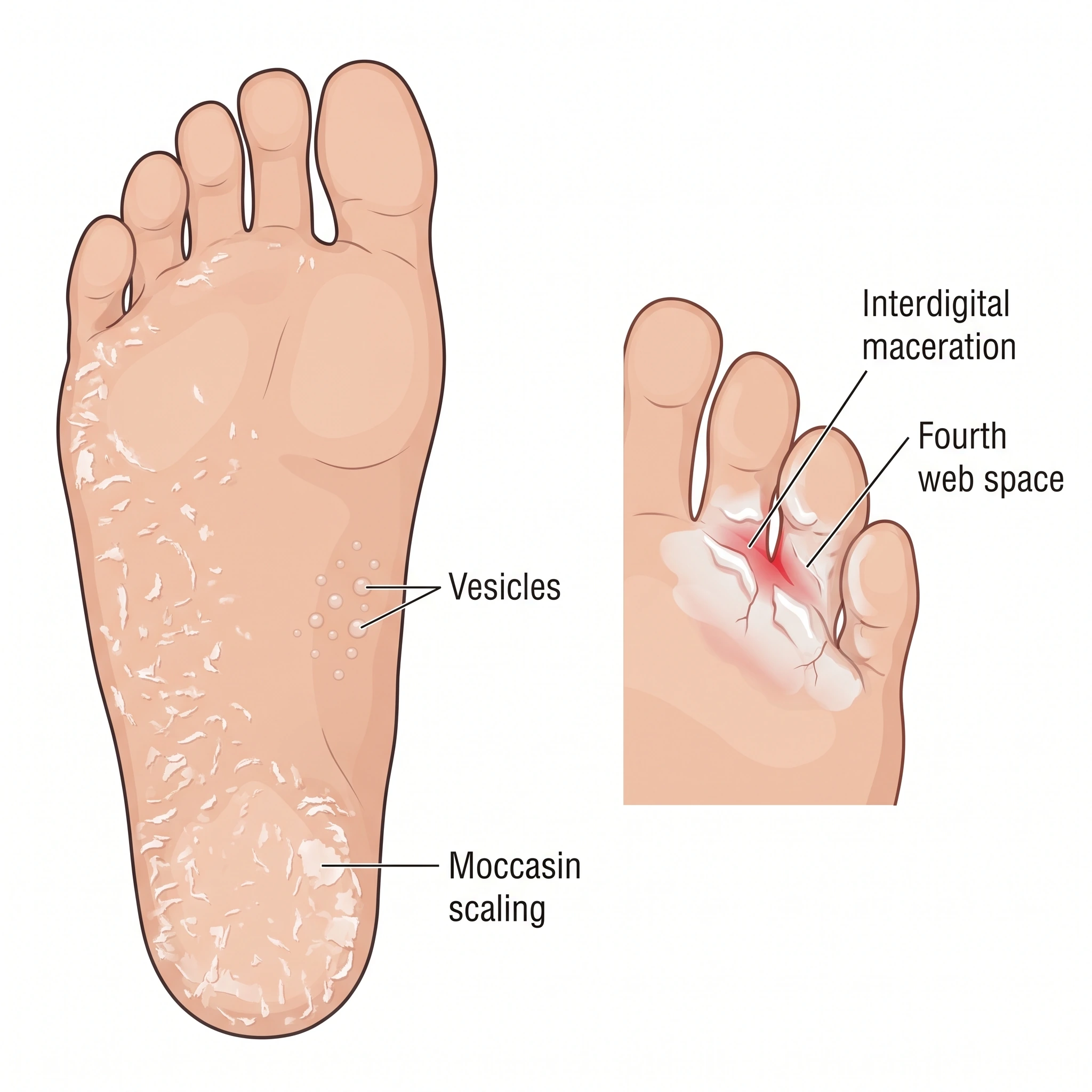
The most familiar form is itching, peeling, and cracking between the toes, often between the fourth and fifth. A second form covers the sole and sides of the foot with dry, scaly skin that looks like a moccasin and is often mistaken for dry skin. A third causes small blisters on the arch or sole.
Athlete's foot is not dangerous for most people, but the cracks it makes in the skin can let bacteria in. For someone with diabetes or poor circulation, that opening matters, and the infection should be treated early.
How is athlete's foot diagnosed?
Athlete's foot is usually diagnosed by exam.
When the picture is unclear, or when treatment has not worked, Dr. Tine scrapes a small sample of skin and looks at it under a microscope or sends it for culture to confirm a fungus is present. This also sorts athlete's foot from eczema, psoriasis, and contact reactions to shoe materials, which can look similar and are treated differently.

What can you expect from treatment?
Most athlete's foot clears within a few weeks of consistent antifungal treatment.
Infection that has spread across the sole or into the nails takes longer and may need oral medicine. Recurrence is common when the shoes and floors that caused it are unchanged, so the habits above matter as much as the medicine. According to general guidance from the Centers for Disease Control and Prevention, finishing the full course of treatment even after symptoms fade lowers the chance of return. These are ranges, not promises.
What are the treatment options?
- 01Keeping the feet clean and dry, with daily sock changes and shoes that dry fully between wKeeping the feet clean and dry, with daily sock changes and shoes that dry fully between wearings
- 02Over-the-counter antifungal cream, spray, or powder applied for the full course, usually sOver-the-counter antifungal cream, spray, or powder applied for the full course, usually several weeks
- 03Prescription topical antifungal medicine for infection that has not clearedPrescription topical antifungal medicine for infection that has not cleared
- 04Oral antifungal medicine for the moccasin type, blistering type, or widespread infectionOral antifungal medicine for the moccasin type, blistering type, or widespread infection
- 05Treating fungal toenails at the same time when present, since they reinfect the skinTreating fungal toenails at the same time when present, since they reinfect the skin
What do patients ask most?
Can I get athlete's foot if I do not play sports?+
Why does my athlete's foot keep coming back?+
Is athlete's foot contagious to my family?+
When is athlete's foot an emergency?+
Trained at Adventist Health White Memorial, Los Angeles (three-year foot and ankle surgical residency, Chief Resident). Sees patients in Fort Lauderdale.
About Dr. Tine →