A hammertoe is a toe that bends downward at the middle joint and stays bent, so the knuckle rubs on shoes and a corn forms on top. Dr. Tine treats hammertoes, claw toes, and mallet toes in Fort Lauderdale, beginning with roomier shoes, padding, and toe exercises before any surgery.
Stephanie Tine diagnoses and treats hammertoe / claw & mallet toe in Fort Lauderdale, from the first visit through recovery.
What is a hammertoe?
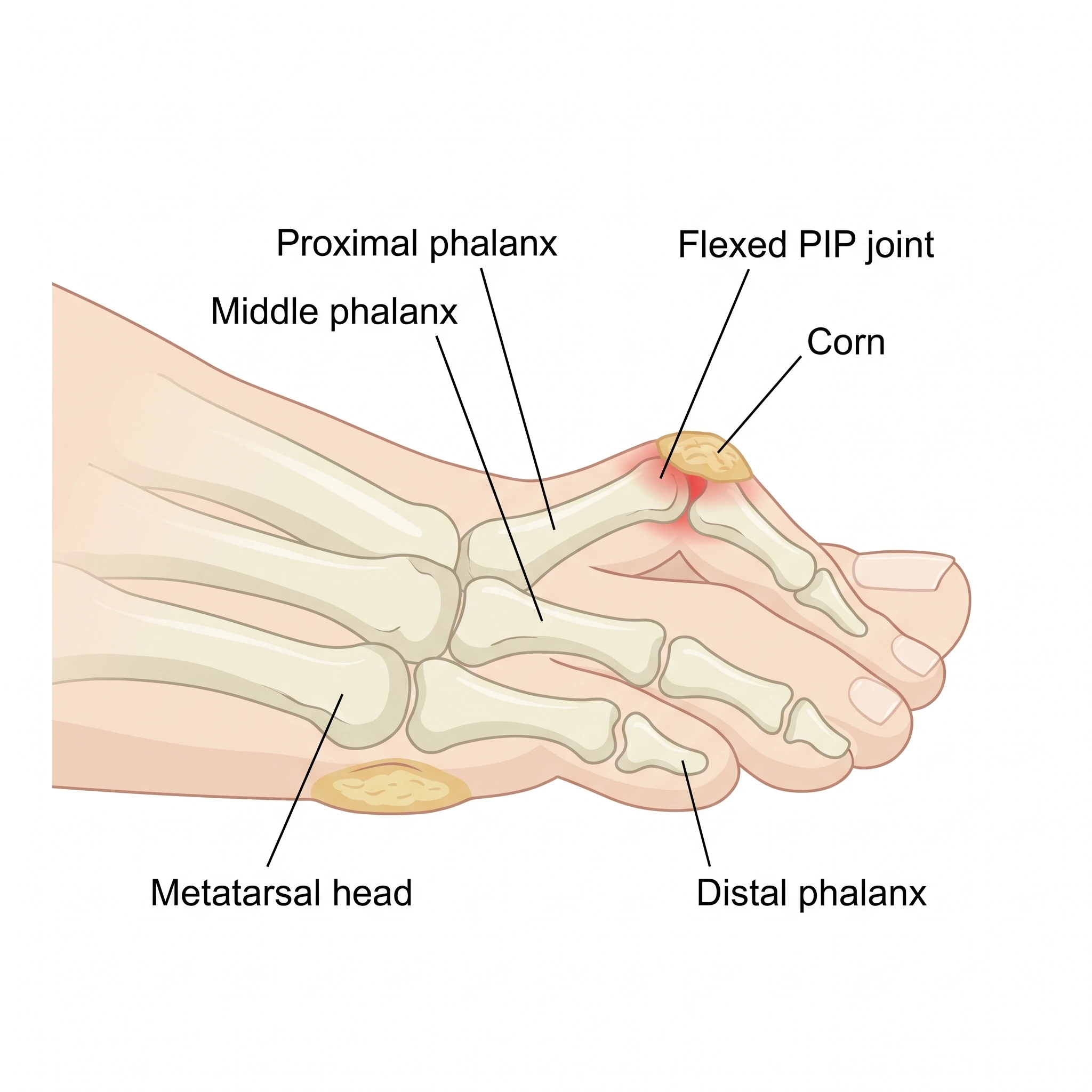
A hammertoe is a toe, usually the second, third, or fourth, that bends down at its middle joint and stays that way.
The bent knuckle rises up and rubs against the top of the shoe. A claw toe bends at both the middle joint and the joint where the toe meets the foot, so the toe curls under. A mallet toe bends only at the joint nearest the tip.
These shapes develop when the small muscles and tendons that balance the toe pull unevenly. A long second toe, a bunion that crowds the toes, shoes that cramp the forefoot, and nerve or muscle conditions all contribute. Early on, the toe is flexible and can be straightened by hand. Over time it can become rigid.
The common complaints are a corn on the top of the bent knuckle, a callus under the ball of the foot, pain in shoes, and trouble fitting footwear.
How is a hammertoe diagnosed?
A hammertoe is diagnosed by exam.
Dr. Tine checks whether the toe can still be straightened by hand, which tells you whether it is flexible or rigid, looks for corns and calluses, and checks the other toes and the big toe joint, since a bunion often crowds the toes beside it. X-rays show the joint positions and whether the joint has worn.
What can you expect from hammertoe treatment?
A flexible hammertoe is usually managed for years without surgery.
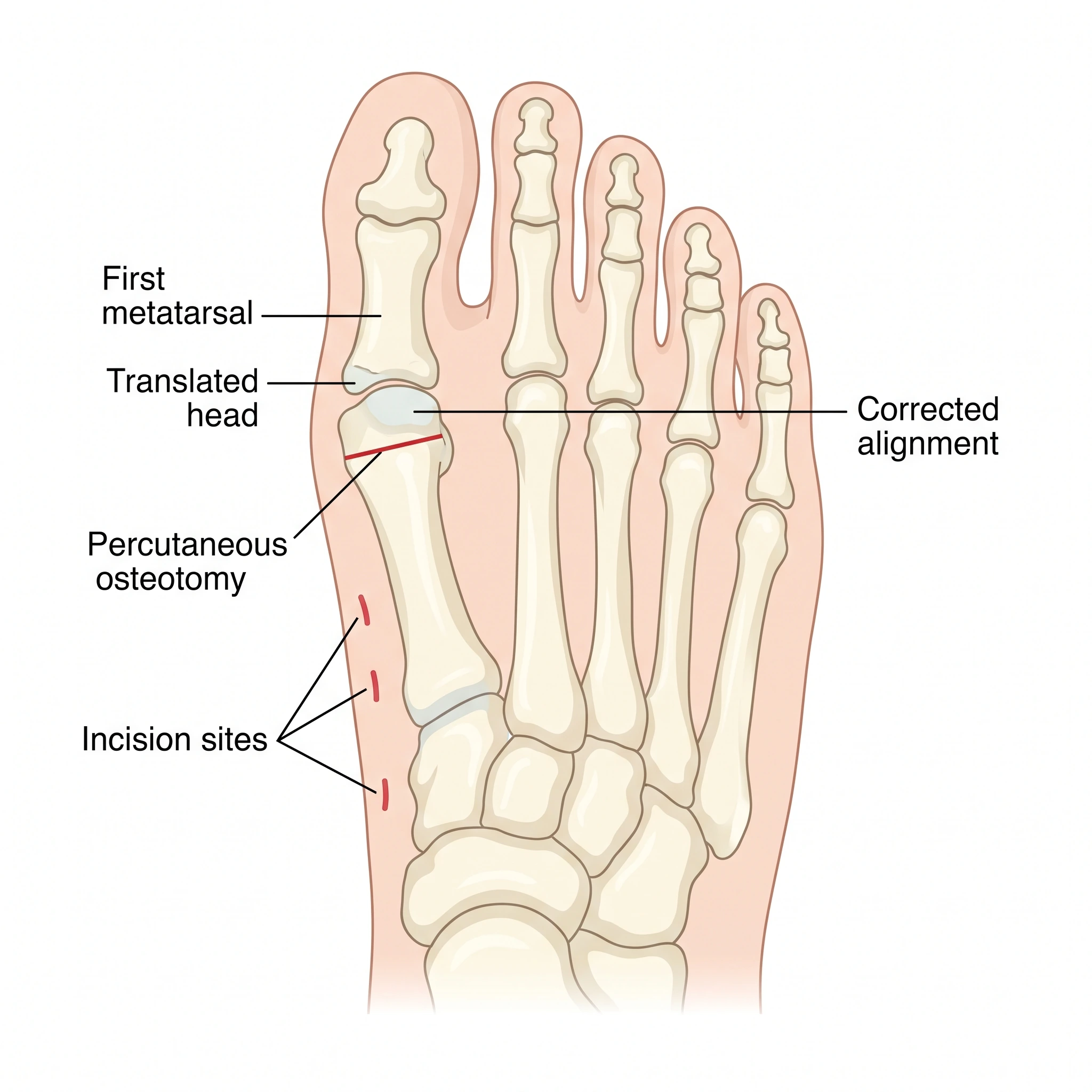
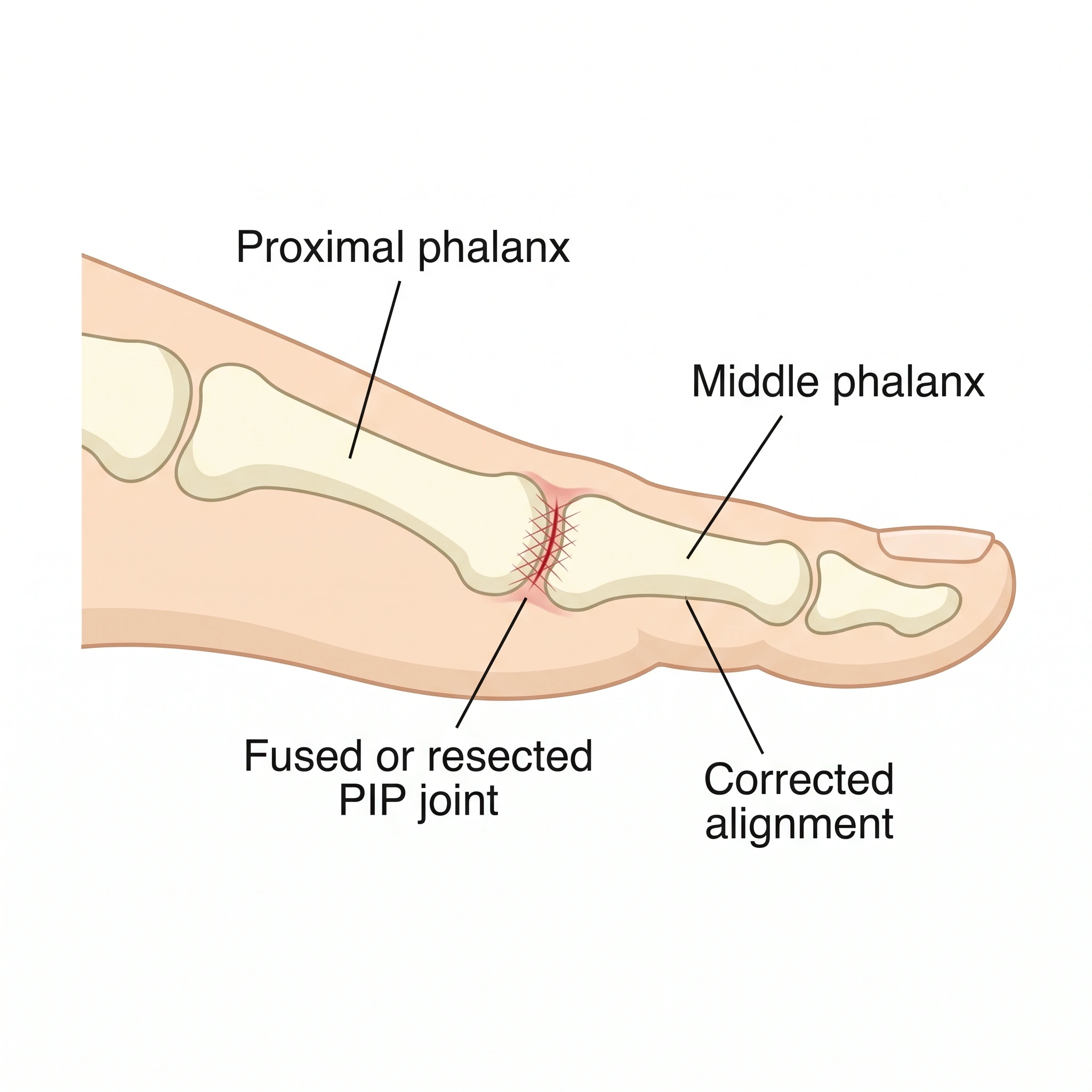
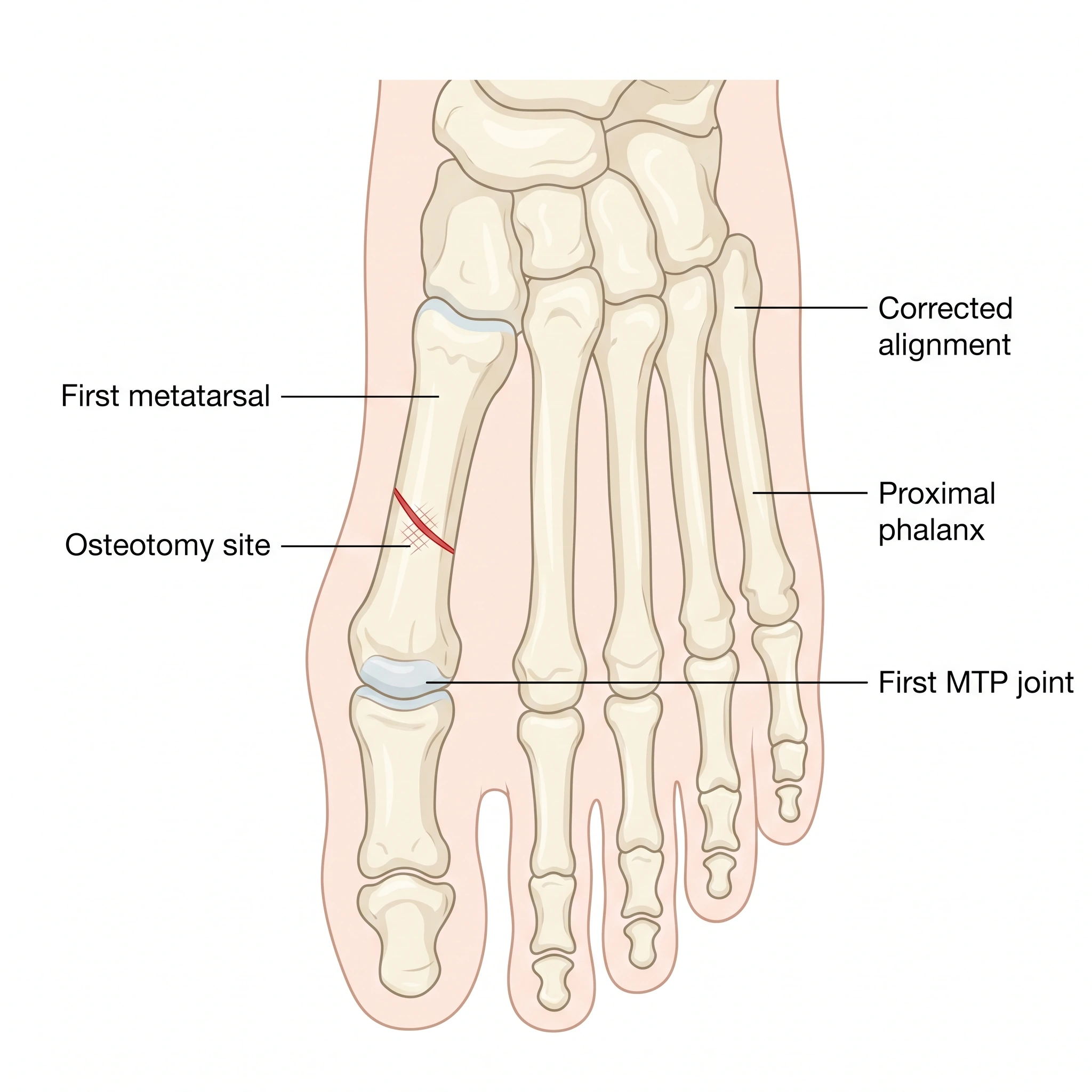
A rigid toe that stays painful is straightened surgically, either by removing a small piece of bone at the joint or by fusing the joint straight, sometimes with a small pin or implant that holds it while it heals. Most people walk in a surgical shoe soon after surgery, with some swelling for weeks. Return to regular shoes is commonly reported over several weeks, according to general guidance from the American College of Foot and Ankle Surgeons. These are ranges, not promises.
What are the treatment options?
- 01Roomier shoes with a deep, wide toe box so the knuckle does not rubRoomier shoes with a deep, wide toe box so the knuckle does not rub
- 02Padding or a toe sleeve over the bent knucklePadding or a toe sleeve over the bent knuckle
- 03Toe stretching and exercises while the toe is still flexibleToe stretching and exercises while the toe is still flexible
- 04Orthotics or a metatarsal pad to take pressure off the ball of the footOrthotics or a metatarsal pad to take pressure off the ball of the foot
- 05Trimming corns and calluses in the officeTrimming corns and calluses in the office
- 06Anti-inflammatory medicine for a sore, inflamed joint, when safe for youAnti-inflammatory medicine for a sore, inflamed joint, when safe for you
- 07Hammertoe surgery to straighten a rigid, painful toe, considered when the steps above no lHammertoe surgery to straighten a rigid, painful toe, considered when the steps above no longer keep the toe comfortable
What do patients ask most?
Can a hammertoe be straightened without surgery?+
Why do I have a corn on top of my toe?+
Is hammertoe surgery a big operation?+
Will the toe stay straight after surgery?+
Trained at Adventist Health White Memorial, Los Angeles (three-year foot and ankle surgical residency, Chief Resident). Sees patients in Fort Lauderdale.
About Dr. Tine →