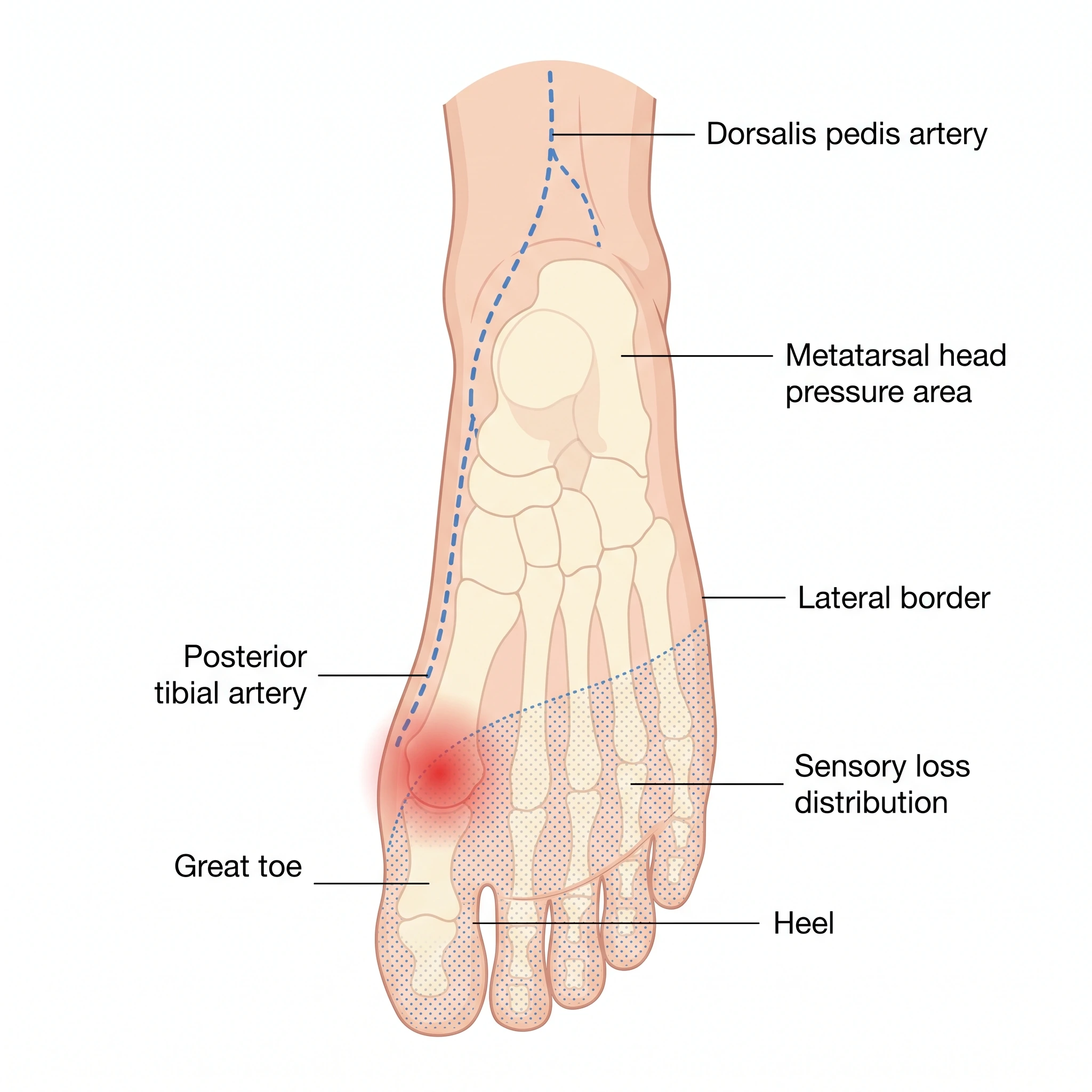
Diabetes can reduce feeling and circulation in the feet, so small problems like a blister or an ingrown nail can go unnoticed and take longer to heal. Dr. Tine provides diabetic foot care in Fort Lauderdale: regular exams, nail and callus care, footwear guidance, and early attention to any wound.
Stephanie Tine diagnoses and treats diabetic foot / at-risk foot in Fort Lauderdale, from the first visit through recovery.
Why does diabetes affect the feet?
Over years, high blood sugar can damage the small nerves in the feet, so that pain, heat, and pressure are felt less clearly.
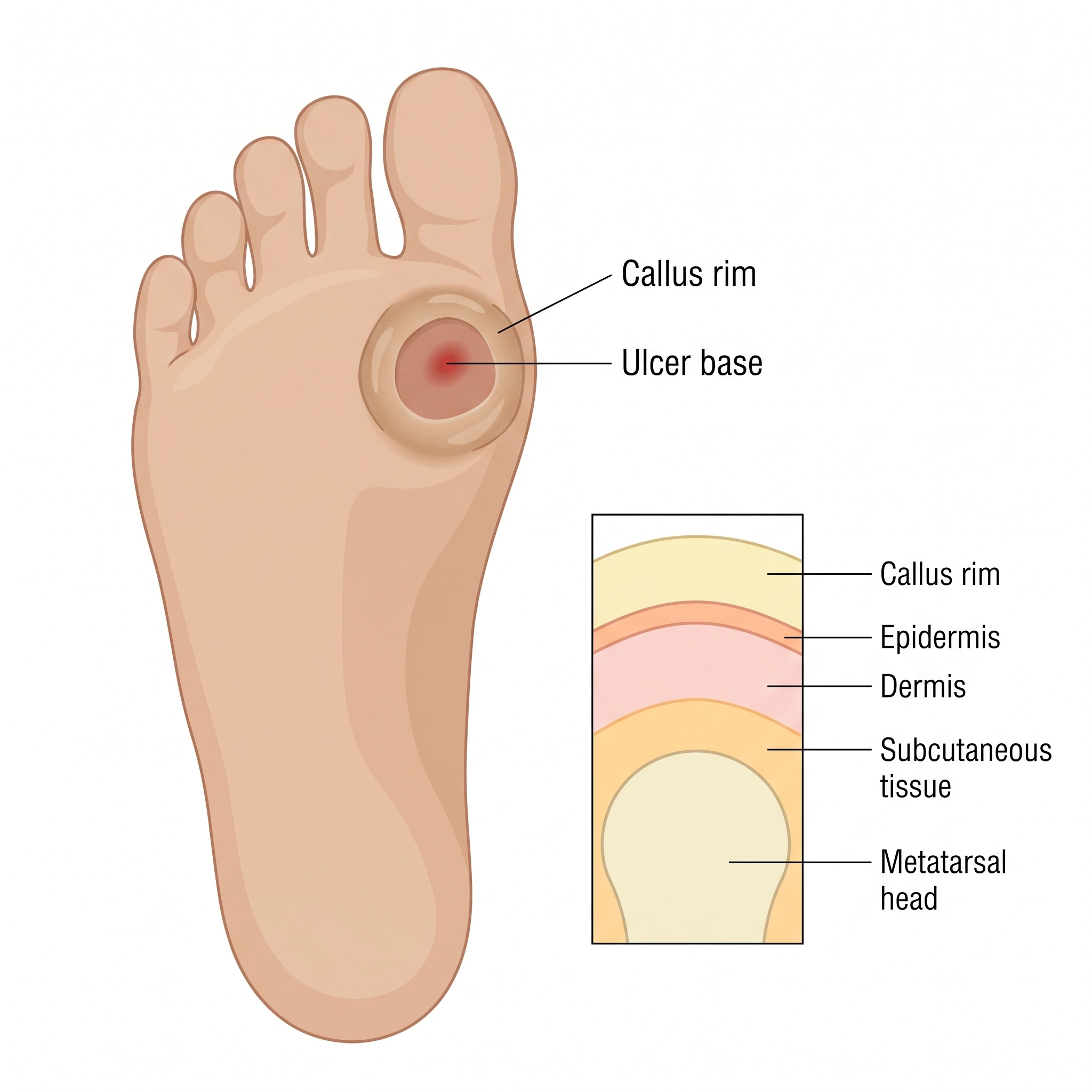
This is called peripheral neuropathy. Diabetes can also narrow the arteries that carry blood to the feet, which slows healing. Together, these mean a small cut, a blister from a new shoe, or a thick callus can become a wound without being noticed, and that wound heals more slowly than it would otherwise.
None of this is inevitable, and none of it happens overnight. Good blood sugar control, daily attention to the feet, and regular professional exams keep most people with diabetes free of foot problems. The point of diabetic foot care is to catch small things while they are small.
A foot exam once a year, more often when there is neuropathy or a history of a wound, is standard care recommended by the American Diabetes Association.
What does a diabetic foot exam involve?
A diabetic foot exam checks the three things that matter: sensation, circulation, and skin.
Dr. Tine tests feeling with a thin filament pressed on several spots and a tuning fork for vibration, feels the pulses in the foot and ankle and may measure blood pressure at the ankle, and inspects the skin, nails, and the spaces between the toes for cracks, calluses, redness, or wounds. The shape of the foot and the shoes you wear are checked, because pressure points are where wounds start. The results set how often you should be seen and whether protective footwear is advised.
What can you expect from diabetic foot care?
Regular diabetic foot care is straightforward and usually painless: an exam, nail and callus care, footwear advice, and a plan for how often to return.
Most people with diabetes who check their feet daily and are seen regularly never develop a serious foot problem. When a wound does start, being seen early keeps treatment simple. The American Diabetes Association notes that structured foot care programs reduce the number of wounds and the complications that follow them. These are general findings, not promises.
What are the treatment options?
- 01Monitoring at home: daily foot checks, looking at the soles and between the toes, with a mMonitoring at home: daily foot checks, looking at the soles and between the toes, with a mirror if needed
- 02Well-fitting shoes and socks, never barefoot, even indoorsWell-fitting shoes and socks, never barefoot, even indoors
- 03Professional nail trimming and callus care for anyone with reduced sensation or circulatioProfessional nail trimming and callus care for anyone with reduced sensation or circulation
- 04Moisturizing dry skin daily, not between the toesMoisturizing dry skin daily, not between the toes
- 05Blood sugar management with your diabetes care team, which protects nerves and vesselsBlood sugar management with your diabetes care team, which protects nerves and vessels
- 06Protective or custom footwear and insoles for feet with deformity, neuropathy, or a healedProtective or custom footwear and insoles for feet with deformity, neuropathy, or a healed wound
- 07Prompt evaluation of any wound, blister, or red spot, the same day if possiblePrompt evaluation of any wound, blister, or red spot, the same day if possible
- 08Vascular evaluation and referral when circulation is reducedVascular evaluation and referral when circulation is reduced
What do patients ask most?
How often should I have my feet checked?+
Can I trim my own toenails?+
Why should I not soak my feet?+
Do I need special shoes?+
Trained at Adventist Health White Memorial, Los Angeles (three-year foot and ankle surgical residency, Chief Resident). Sees patients in Fort Lauderdale.
About Dr. Tine →