Heel pain that is worst with the first steps of the morning is most often plantar fasciitis, an irritation of the thick band of tissue along the bottom of the foot. Dr. Tine evaluates heel pain in Fort Lauderdale, sorts out what is driving it, and starts with stretching, footwear, and rest before anything else.
Stephanie Tine diagnoses and treats heel pain (symptom door) in Fort Lauderdale, from the first visit through recovery.
Questions patients ask
Why does my heel hurt most in the morning?+
Do I need an X-ray for heel pain?+
Is a heel spur causing my pain?+
How long does heel pain take to get better?+
Can I keep exercising with heel pain?+
What does heel pain usually mean?
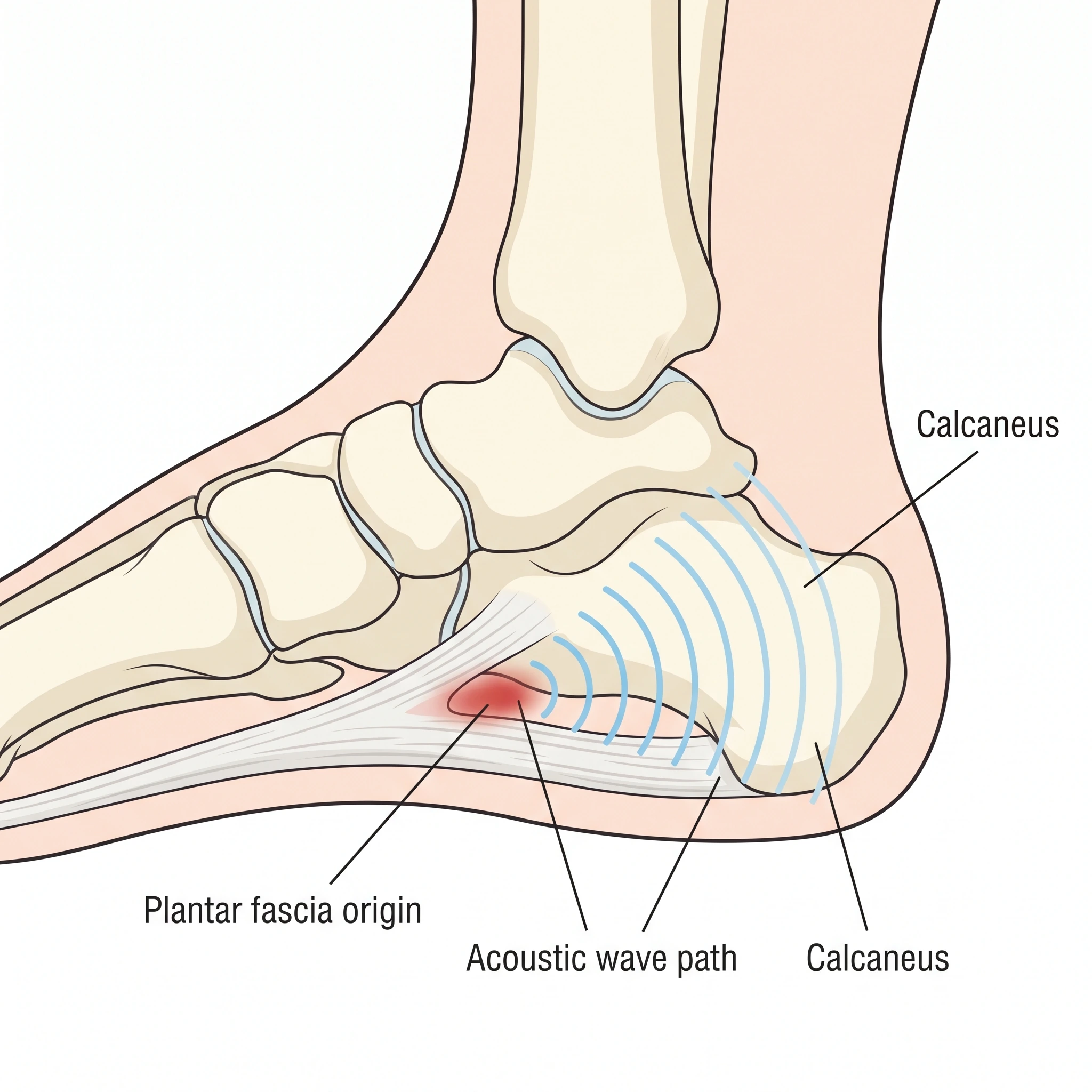
Heel pain most often comes from plantar fasciitis, an irritation of the plantar fascia, the band of tissue that runs from the heel to the base of the toes.
The classic sign is a sharp pain under the heel with the first steps out of bed or after sitting for a while. It often eases as you walk, then returns after a long day on your feet.
Pain at the back of the heel, above the bone, points more toward the Achilles tendon, the cord that connects the calf muscle to the heel. Pain that is worse with each step and does not ease with walking can be a stress fracture, a small crack in the heel bone from repeated load. A bony bump at the back of the heel that rubs on shoes is often called a pump bump.
In children who play sports, heel pain is commonly Sever's disease, an irritation of the growth plate in the heel. It is not a disease in the usual sense and it settles as the bone matures.
A symptom page cannot tell you which of these you have. It can tell you what each one tends to feel like, what is reasonable to try at home, and when it is time to be seen.
What does an evaluation for heel pain involve?
An evaluation for heel pain starts with a conversation about when the pain is worst, what you have tried, and what you do on your feet all day.
Dr. Tine then examines the heel, presses along the plantar fascia and the Achilles tendon to find the tender spot, checks how far the ankle and big toe bend, and watches how you stand and walk.
Most heel pain is diagnosed by exam alone. An X-ray is used when the history suggests a fracture or when the pain has not responded to a fair trial of home care. Ultrasound in the office can show thickening of the plantar fascia. An MRI is reserved for pain that has not followed the usual course.
What can I do at home?
Most heel pain improves without a procedure. Calf and arch stretching in the morning before you stand, supportive shoes worn indoors as well as out, and less time on hard floors resolve a large share of cases. A frozen water bottle rolled under the arch for a few minutes can calm a sore heel after a long day. Over-the-counter anti-inflammatory medicine can help for a short stretch, if your doctor has said these medicines are safe for you. Cushioned heel cups or an over-the-counter arch support often reduce the morning pain. The American Podiatric Medical Association suggests giving these measures several weeks before considering other options.
When is it time to be seen?
- Heel pain that has lasted more than a few weeks despite stretching, supportive shoes, and rest.
- Pain that is getting worse with each step rather than easing as you walk.
- Swelling, warmth, or redness around the heel.
- Pain that started with a fall, a jump, or a sudden push-off.
- Numbness, tingling, or burning in the heel or the sole.
- Heel pain in a child that limits play or causes a limp.
- Any heel pain if you have diabetes or poor circulation.
How do I keep it from coming back?
- Stretch before you stand: Loosen the calf and the arch each morning before the first steps.
- Wear support indoors: Going barefoot on hard floors re-irritates a healing heel.
- Replace worn shoes: A running or work shoe with a collapsed heel counter no longer supports you.
- Build up new activity slowly: Sudden jumps in walking, running, or standing hours are the usual trigger.
- Keep the calf flexible: A tight calf loads the heel with every step.
Trained at Adventist Health White Memorial, Los Angeles (three-year foot and ankle surgical residency, Chief Resident). Sees patients in Fort Lauderdale.
About Dr. Tine →