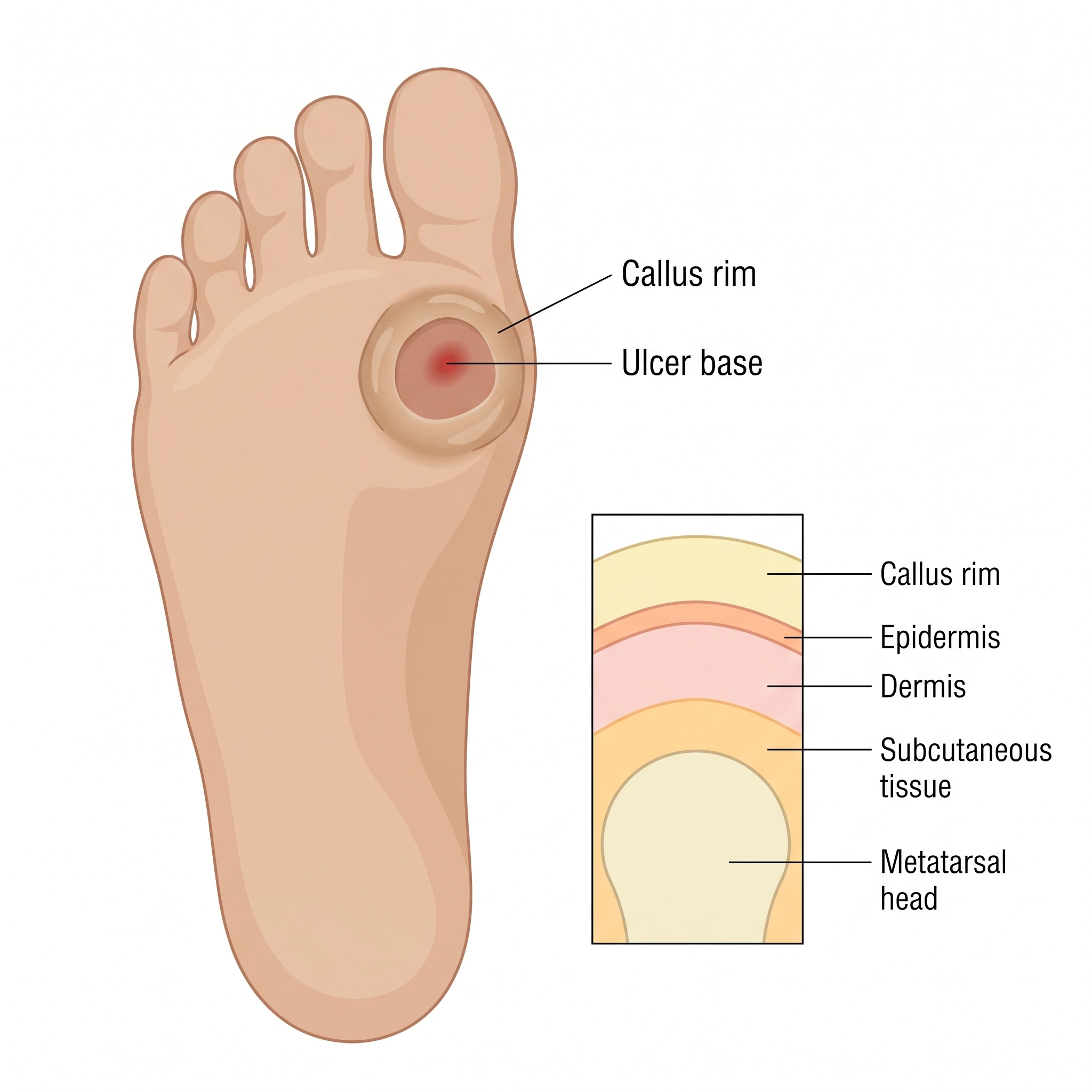
A diabetic foot ulcer is an open wound on the foot that heals slowly because of reduced feeling, pressure, or circulation. Dr. Tine treats diabetic foot ulcers in Fort Lauderdale with wound cleaning, offloading to take pressure off the area, infection control, and a check of circulation, aiming to heal the wound and prevent the next one.
Stephanie Tine diagnoses and treats diabetic foot ulcer / wound care in Fort Lauderdale, from the first visit through recovery.
What is a diabetic foot ulcer?
A diabetic foot ulcer is an open sore on the foot, most often on the sole or over a bony spot, in a person with diabetes.
It usually starts small: a blister from a shoe, a crack in a callus, a cut that went unnoticed because the foot could not feel it. Because sensation is reduced, the person keeps walking on it, and because circulation may be reduced, it heals slowly.
A small cut or blister can take longer to heal for people with diabetes, and can go unnoticed when nerve damage has reduced sensation. Checking your feet daily and having any wound looked at early is what keeps a minor problem minor. Diabetic foot ulcers are common: a review in JAMA estimated about 1.6 million in the United States each year. Most heal with consistent care.
An evaluation includes an exam of the wound, a check of circulation and sensation, and a plan for taking pressure off the area while it heals.
How is a diabetic foot ulcer evaluated?
A diabetic foot ulcer is evaluated by looking at the wound and the foot around it.
Dr. Tine measures the wound, checks how deep it goes and whether bone can be reached, and looks for signs of infection such as redness, warmth, drainage, or odor. Circulation is checked by feeling pulses and, when needed, by measuring blood pressure at the ankle or toe, since a wound cannot heal without adequate blood flow. X-rays look at the bone underneath a deep or long-standing wound. Blood tests and a wound culture are used when infection is suspected. Your blood sugar control is part of the picture, because healing depends on it.
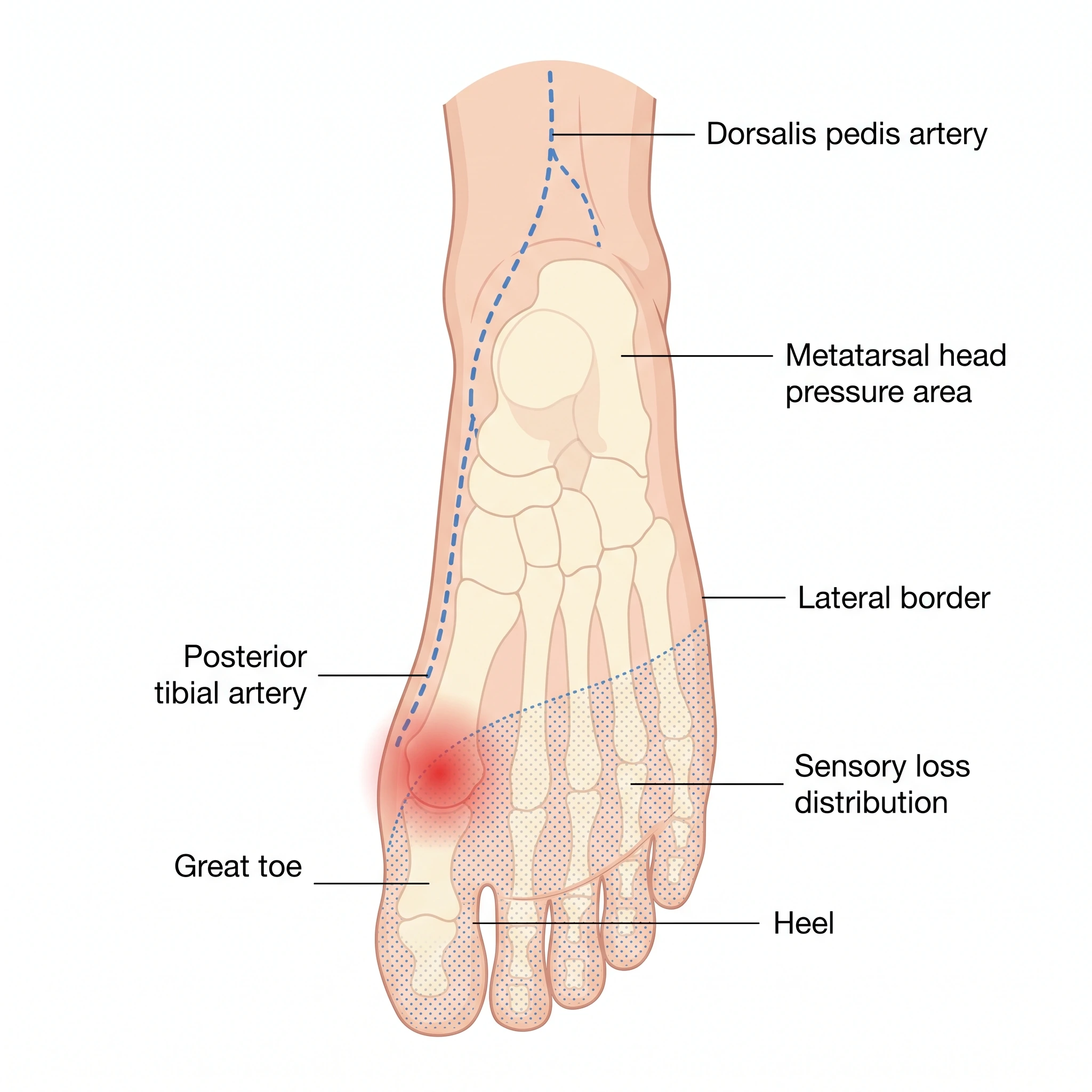
What can you expect from ulcer treatment?
Most diabetic foot ulcers heal with consistent offloading, wound care, and blood sugar control, and the visit schedule is frequent, often weekly, until the wound is closed.
Healing time depends on the wound's size, depth, and blood supply, and is commonly measured in weeks to months rather than days. When circulation is reduced, restoring blood flow comes first, in coordination with a vascular specialist. Once a wound heals, protective footwear and regular checks are the plan for keeping it healed, because the skin over a healed ulcer stays vulnerable. According to general guidance from the National Institute of Diabetes and Digestive and Kidney Diseases, early treatment is the most important factor in a good outcome. These are ranges, not promises.
What are the treatment options?
- 01Offloading, which means taking pressure off the wound with a special shoe, boot, or a castOffloading, which means taking pressure off the wound with a special shoe, boot, or a cast that stays on, so the foot can heal while you keep moving
- 02Cleaning the wound and removing dead tissue and callus, called debridement, usually in theCleaning the wound and removing dead tissue and callus, called debridement, usually in the office
- 03A dressing chosen for the wound, changed on a schedule, with instructions for homeA dressing chosen for the wound, changed on a schedule, with instructions for home
- 04Antibiotics when the wound is infected, chosen with a culture when possibleAntibiotics when the wound is infected, chosen with a culture when possible
- 05Blood sugar management with your diabetes care team, which speeds healingBlood sugar management with your diabetes care team, which speeds healing
- 06Vascular evaluation and, when circulation is reduced, referral to restore blood flowVascular evaluation and, when circulation is reduced, referral to restore blood flow
- 07Advanced wound treatments such as skin substitutes or negative-pressure therapy for woundsAdvanced wound treatments such as skin substitutes or negative-pressure therapy for wounds that are slow to heal
- 08Surgery to remove infected bone or correct a deformity that keeps causing the woundSurgery to remove infected bone or correct a deformity that keeps causing the wound
What do patients ask most?
Why is my wound taking so long to heal?+
Do I have to stop walking?+
What is debridement?+
Will I lose my foot?+
Trained at Adventist Health White Memorial, Los Angeles (three-year foot and ankle surgical residency, Chief Resident). Sees patients in Fort Lauderdale.
About Dr. Tine →