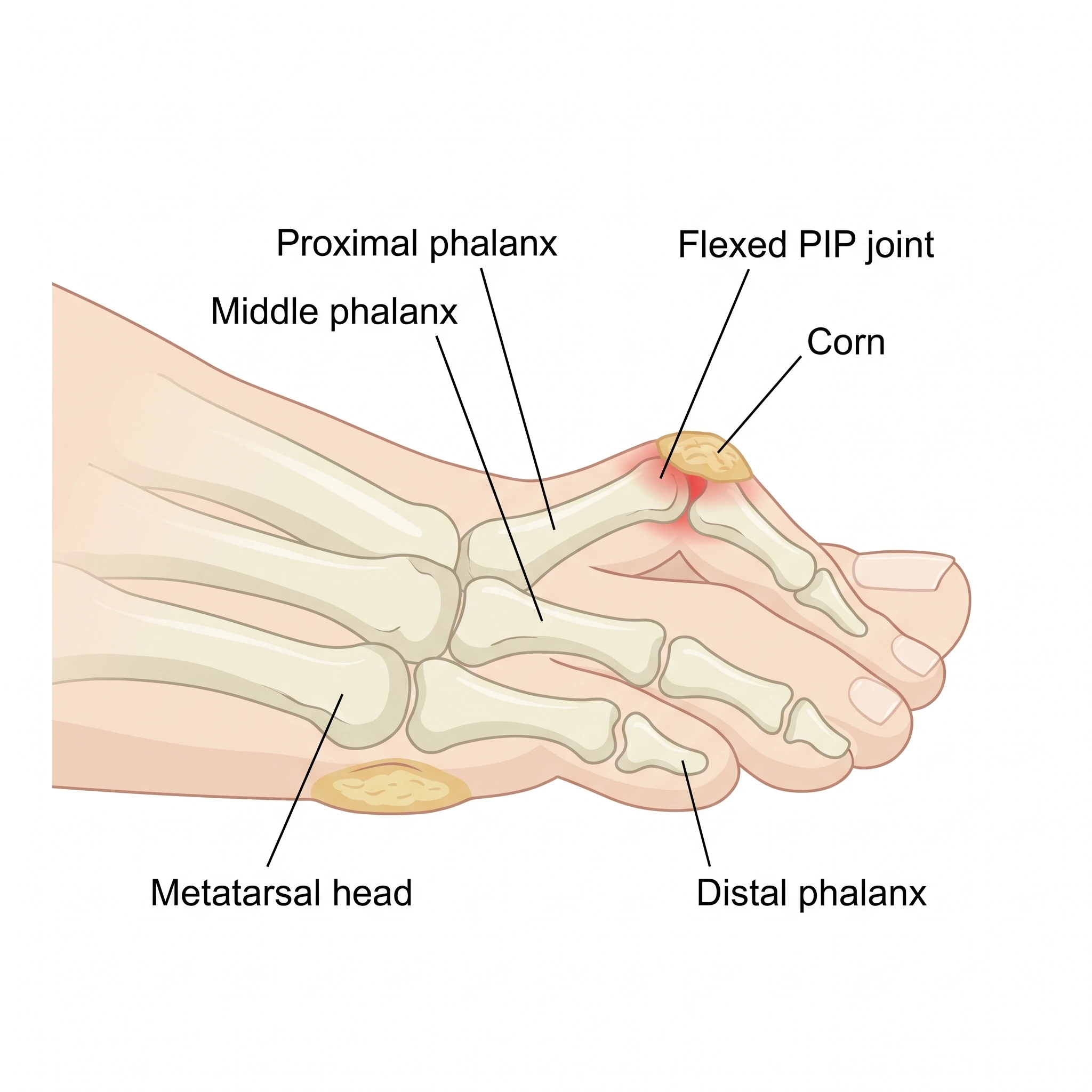
Hammertoe correction straightens a toe that has bent into a fixed, claw-like position and causes pain or rubbing in shoes. Dr. Tine performs hammertoe correction in Fort Lauderdale for toes that stay painful or rub against shoes after padding, footwear changes, and other non-surgical care.
Stephanie Tine performs hammertoe surgery in Fort Lauderdale when it is the right step, and reviews every alternative with you first.
What is Hammertoe Surgery?
A hammertoe is a toe that bends downward at the middle joint into a claw-like shape, most often one of the smaller toes.
It can start out flexible and, over time, become stiff and fixed.
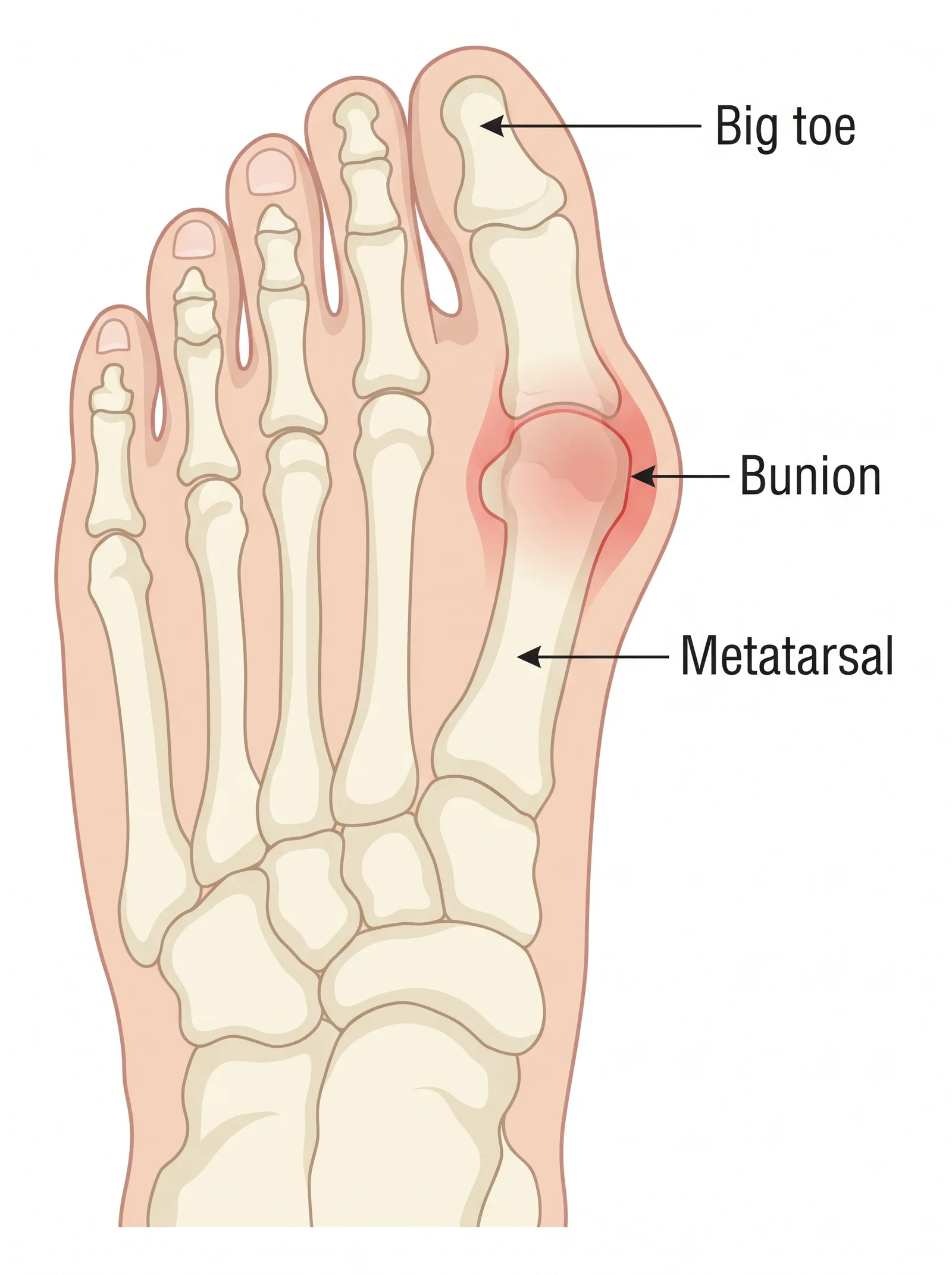
The bent toe rubs against shoes, which leads to corns, calluses, and pain over the knuckle. Hammertoes often occur alongside bunions and are driven by the mechanics and shape of the foot, sometimes made worse by tight shoes.
While the toe is still flexible, non-surgical care can ease symptoms. Once the toe is stiff and fixed, surgery is the way to straighten it. Correction is chosen for pain and rubbing, not for appearance.
What happens during Hammertoe Surgery, step by step?
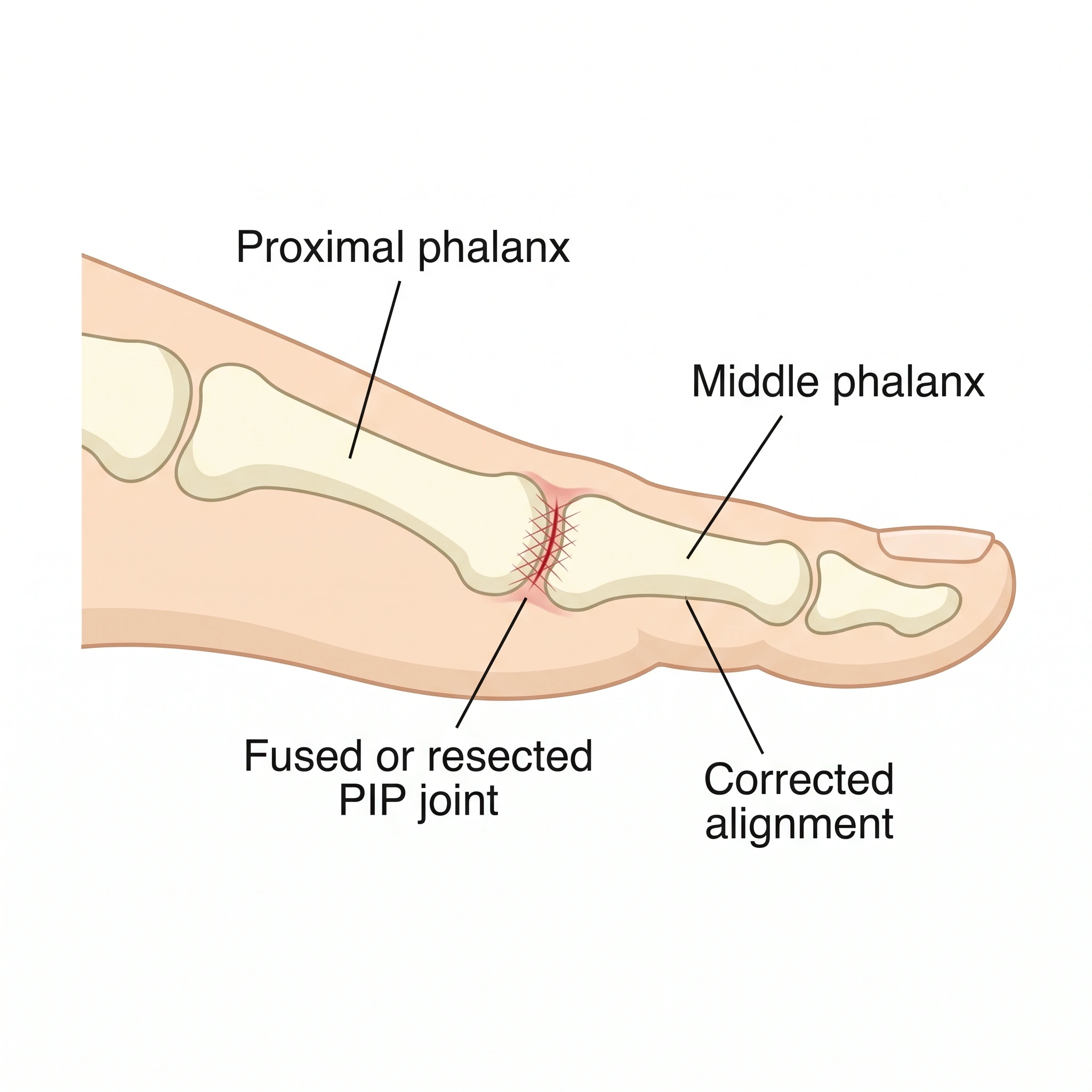
Hammertoe correction straightens the toe and depends on whether it is still flexible or has become fixed.
For a flexible toe, the surgeon may release or rebalance the tight tendons that hold it bent. For a stiff, fixed toe, a small piece of bone at the affected joint is removed and the joint is straightened, sometimes held with a temporary pin or a small internal implant while it heals. The procedure is usually outpatient, meaning you go home the same day, and Dr. Tine will explain which technique matches your toe.
What is recovery like after Hammertoe Surgery?
After hammertoe correction you will wear a special shoe and keep pressure off the toe as directed.
Swelling in the toe can take a while to settle. Return to comfortable shoes and normal walking is commonly reported over several weeks to a few months, according to general guidance from the American Academy of Orthopaedic Surgeons. These are ranges, not promises, and depend on the technique used and your healing.
Read the full guide to preparing for surgery →
Your own recovery instructions come from the office and are specific to you. This page describes the general course, not a plan to follow.
What are the treatment options?
- 01Roomy shoes with a deep toe box to reduce rubbingRoomy shoes with a deep toe box to reduce rubbing
- 02Toe pads, splints, or cushions to relieve pressure over the knuckleToe pads, splints, or cushions to relieve pressure over the knuckle
- 03Trimming of corns and calluses by a professionalTrimming of corns and calluses by a professional
- 04Orthotics, shoe inserts that improve foot mechanicsOrthotics, shoe inserts that improve foot mechanics
- 05Toe-stretching and strengthening exercises while the toe is still flexibleToe-stretching and strengthening exercises while the toe is still flexible
- 06Hammertoe correction, considered when the toe is stiff and painful despite non-surgical caHammertoe correction, considered when the toe is stiff and painful despite non-surgical care
What do patients ask most?
Can a hammertoe be fixed without surgery?+
Is hammertoe surgery done for appearance?+
Will a pin stick out of my toe after surgery?+
How long is recovery after hammertoe correction?+
Trained at Adventist Health White Memorial, Los Angeles (three-year foot and ankle surgical residency, Chief Resident). Sees patients in Fort Lauderdale.
About Dr. Tine →