Hammertoe correction is surgery that straightens a toe stuck in a bent position. It is considered when the bend causes pain, corns, or trouble with shoes, and when padding, roomier footwear, and other nonsurgical steps have not helped enough. The procedure and recovery depend on how stiff the toe has become.
Stephanie Tine performs hammertoe surgery in Fort Lauderdale when it is the right step, and reviews every alternative with you first.
What is This Procedure?
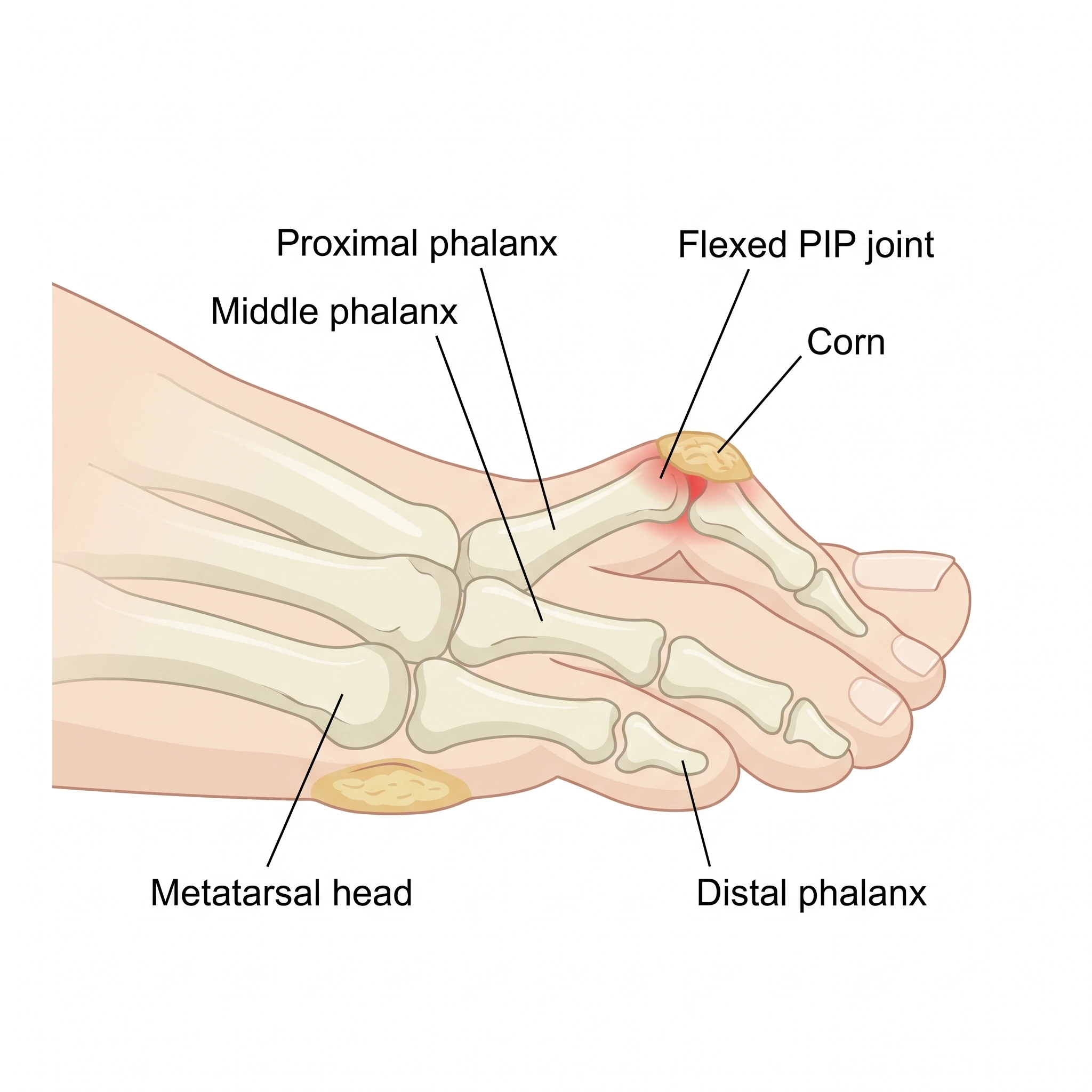
A hammertoe is a toe that bends downward at the middle joint instead of lying flat, so it looks a bit like a hammer or a claw.
It most often affects the second, third, or fourth toe. The bend happens when the small muscles and tendons that balance the toe fall out of balance, pulling the toe into a bent shape. Over time the toe can get stuck there.
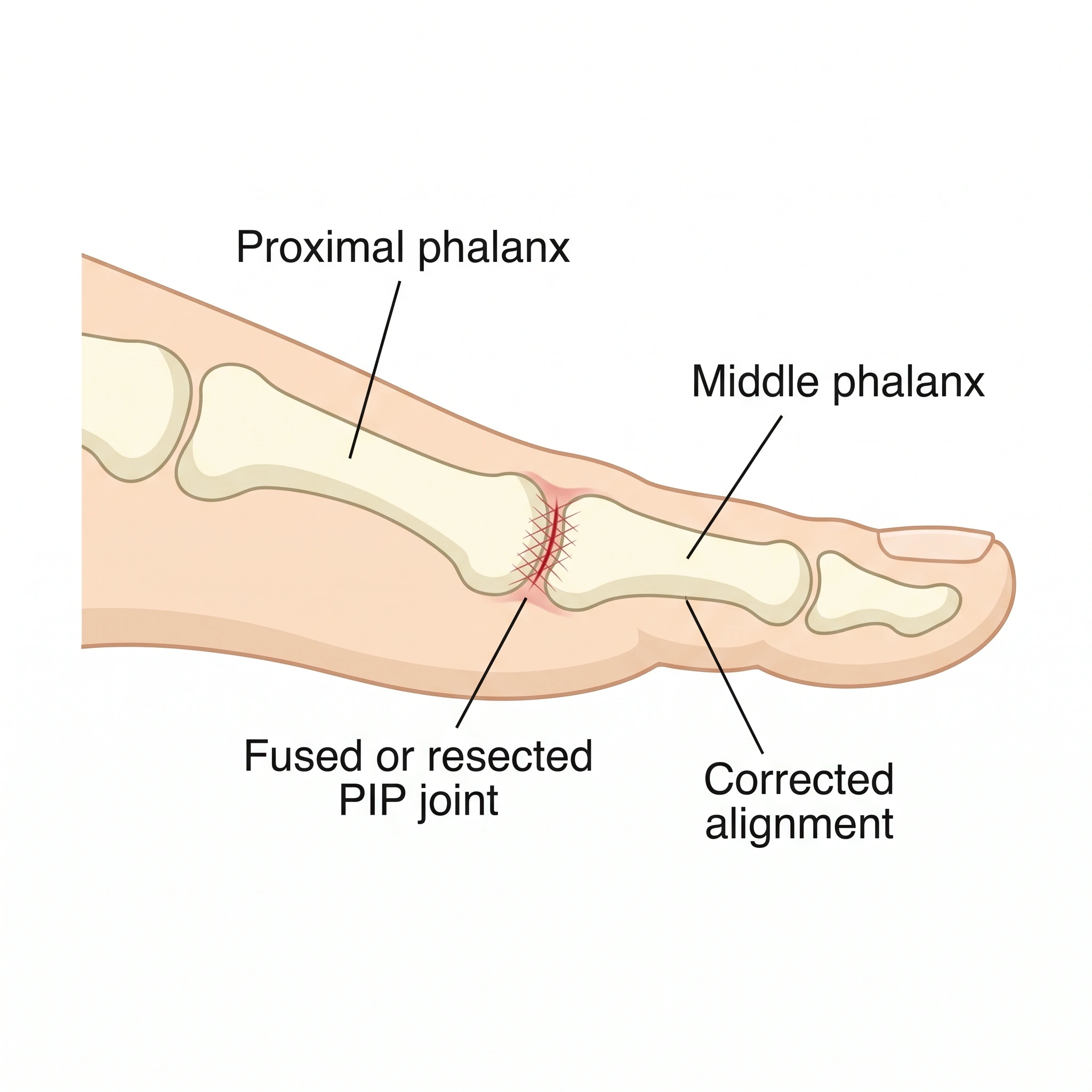
Hammertoe correction is surgery to straighten the toe. There is no single operation for every hammertoe, because toes differ. The key question is whether the toe is still flexible or has become rigid. A flexible hammertoe can still be straightened by hand. A rigid one is locked in place. Flexible toes often need only a soft tissue procedure, where the surgeon releases or rebalances the tight tendons. Rigid toes usually need a bone procedure, where the surgeon removes a small piece of bone at the stiff joint so the toe can lie straight, a step called an arthroplasty or fusion.
Surgeons often combine steps to get a straight, comfortable toe. They may release a tight tendon, remove a small bit of bone, and sometimes place a tiny pin or implant to hold the toe straight while it heals. The pin may stick out of the tip of the toe for a few weeks and is removed in the office, or it may be a small implant that stays inside. Your surgeon will choose based on your toe.
The goal is a toe that lies flat, fits in a shoe without rubbing, and stops causing pain. Correcting a hammertoe is usually about comfort and function, not appearance, though a straighter toe often looks better too.
What are the symptoms of Hammertoe Surgery, and when should you see a specialist?
People with hammertoes usually notice the toe long before they notice pain.
It looks bent. It may cross slightly or sit higher than the toes beside it. Then the trouble with shoes begins.
The bent joint rubs against the top of the shoe. That rubbing causes a corn, which is a small, thick, hard patch of skin, on top of the bent joint. A callus, a broader area of thick skin, may form on the ball of the foot underneath. These can be tender or even painful when you walk. Some people feel a burning or aching in the toe. Shoes that used to fit now pinch, and finding comfortable footwear becomes a daily problem.
Early on, the toe is flexible and can be pushed straight. Over months or years it can stiffen until it no longer straightens on its own. A stiff toe is harder to pad and often more painful.
It is reasonable to see a foot and ankle specialist when the toe hurts, when corns or calluses keep coming back, when the toe is getting stiffer or more bent, or when you cannot find shoes that fit without rubbing. People with diabetes or poor circulation should see a specialist early, because a corn that breaks down can become a wound that is slow to heal. Seeing a specialist does not mean you need surgery. Many hammertoes are managed well without it.
How is Hammertoe Surgery diagnosed, and what does the visit involve?
Diagnosing a hammertoe is mostly a matter of looking and feeling.
The surgeon examines the toe and, importantly, checks whether it is flexible or rigid by gently trying to straighten it. This single test guides the whole treatment plan, because flexible and rigid toes are treated differently.
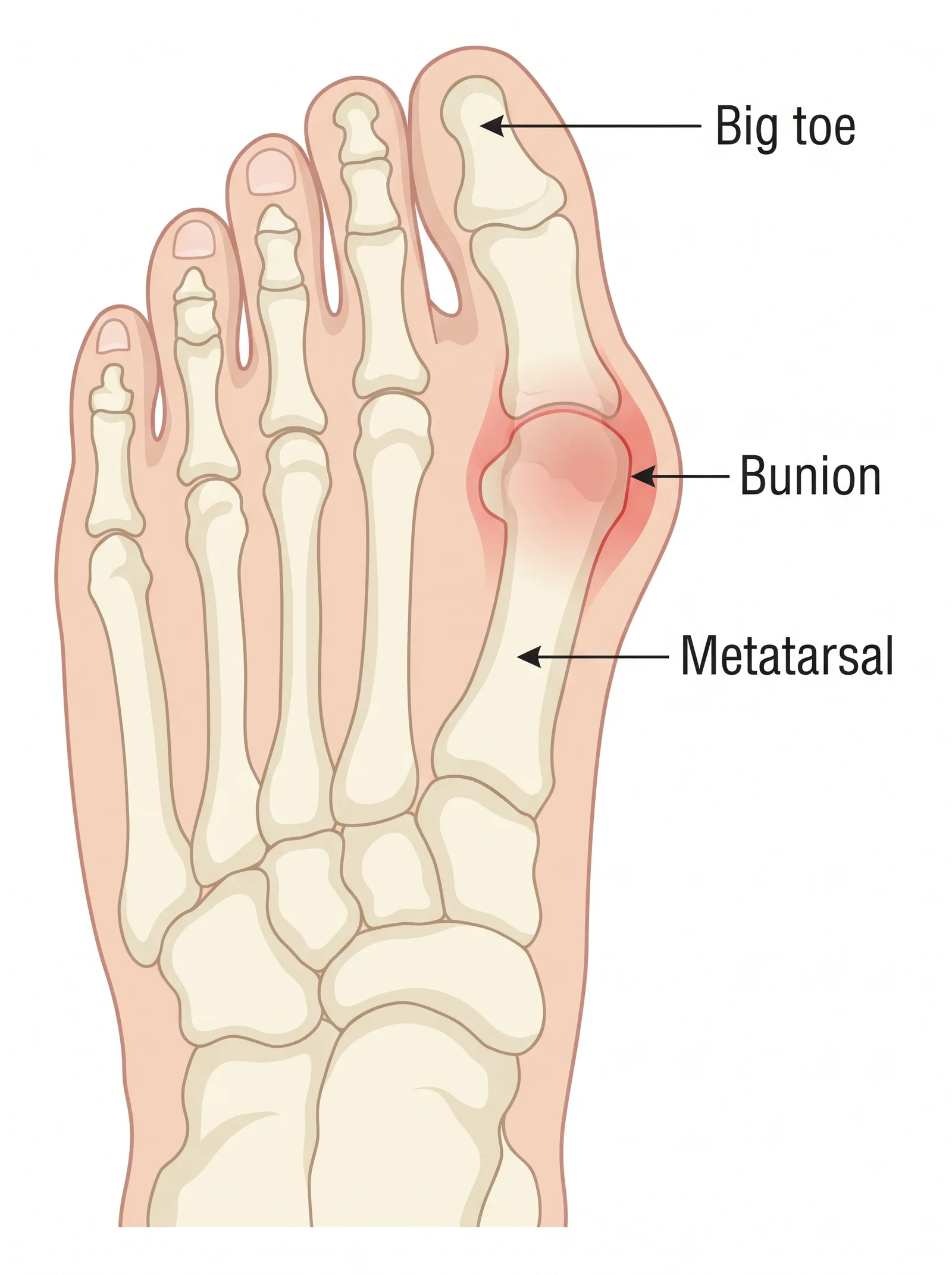
The surgeon will also look at the corns and calluses, which show where the toe is rubbing, and check the toes and foot as a whole. Hammertoes often come along with bunions or other foot problems, and treating one without the other can disappoint. The surgeon will feel your pulses and check sensation to be sure circulation and nerves are healthy, which matters for healing.
X-rays are usually taken. They show the position of the bones, how bent the joint is, and whether there is any arthritis or other issue that changes the plan. If surgery is being considered, the X-rays help the surgeon decide exactly which steps the toe needs.
By the end of the visit, the surgeon can explain whether padding and shoe changes are likely to be enough or whether surgery is worth considering, and if so, what kind.
When is Hammertoe Surgery the right treatment?
Surgery is not the first step for most hammertoes.
Nonsurgical care often controls the symptoms, especially while the toe is still flexible, and it is always tried first.
The simplest and most helpful change is footwear. Shoes with a wide, deep toe box, the front part of the shoe, give the bent toe room and stop the rubbing that causes corns. Low heels help, because high heels push the toes forward into the tight front of the shoe. For many people, a shoe change alone makes a real difference.
Padding and pads protect the sore spots. A soft pad over a corn, a cushion under the ball of the foot, or a small splint that holds the toe straighter can all reduce pain. A podiatrist can trim thick corns and calluses safely, which relieves pressure. Custom shoe inserts, called orthotics, can rebalance the foot and take pressure off the toe.
Toe exercises and stretches may help keep a flexible toe moving. None of these steps straightens a toe permanently, but they can control pain and delay or avoid surgery.
When the toe is painful despite good footwear and padding, when corns keep breaking down, or when the toe has stiffened and daily activities are affected, surgery becomes a reasonable option. The point of trying conservative care first is that many toes stay comfortable without an operation.
Struggling to find shoes that do not rub? The office can look at your toe and your options. Request an appointment.
What happens during Hammertoe Surgery, step by step?
Because hammertoe surgery is tailored to the toe, the exact steps vary.
Here is the general sequence for a common correction.
Anesthesia. Most hammertoe surgery is done with a local anesthetic that numbs the toe and foot, often with light sedation to keep you relaxed. You are usually awake but comfortable. Your care team will discuss the plan.
The incision. The surgeon makes a small cut over the top of the bent joint.
Releasing the soft tissue. The surgeon releases or lengthens the tight tendons and the tissue around the joint that are pulling the toe into its bent shape. For a flexible toe, this rebalancing may be most of the operation.
Correcting the bone, if needed. For a rigid toe, the surgeon removes a small piece of bone at the stiff joint so the toe can straighten. The two ends of bone may be allowed to form a flexible joint, or they may be joined together to fuse in a straight position, depending on the toe.
Holding it straight. To keep the toe straight while it heals, the surgeon often places a thin pin through the toe or a small implant inside it. A pin usually stays for a few weeks and is removed in the office, a quick step that is usually not painful.
Closing up. The incision is closed with stitches, and a dressing and often a special stiff-soled surgical shoe are applied to protect the toe.
Hammertoe surgery is usually short, and most people go home the same day.
What is the recovery timeline for Hammertoe Surgery?
Recovery from hammertoe surgery is measured by what the toe can do, not only by the calendar.
The milestones below pair typical timeframes with function.
First two weeks: protect the toe. You wear a stiff-soled surgical shoe that lets you walk on your heel or the flat of your foot without bending the toe. Keep the foot elevated as much as possible to control swelling, which is the main reason toes stay sore early on. The milestone is walking short distances in the surgical shoe without much pain.
Weeks two to six: healing and pin care. Stitches usually come out around two weeks. If a pin is holding the toe straight, it is typically removed in the office in the first several weeks. Swelling slowly improves. The milestone here is a comfortable, straight toe as the bone and soft tissue knit.
Weeks six to twelve: back to shoes. As swelling comes down, most people move from the surgical shoe into a roomy, soft, supportive shoe. The toe may still be a little swollen and stiff. The milestone is walking normally in a regular, comfortable shoe.
Three months and beyond: full settling. Swelling in a toe can take a while to fully resolve, and the toe keeps settling for several months. Most people are back to their usual activities well before then.
According to general guidance from the American Academy of Orthopaedic Surgeons, recovery from hammertoe surgery commonly takes a few weeks to a few months, with swelling sometimes lasting longer, depending on the exact procedure and the person. These are ranges, not promises. A simple soft tissue release recovers faster than a bone correction, and your surgeon will tell you what to expect for your toe.
Read the full guide to preparing for surgery →
Your own recovery instructions come from the office and are specific to you. This page describes the general course, not a plan to follow.
How should you prepare for surgery?
A little planning makes the first weeks easier.
Your home. You will need to keep the foot elevated to control swelling, so set up a comfortable spot where you can sit or lie with the foot up on pillows, higher than your heart when possible. Keep water, a charger, and what you need within reach. Clear rugs and clutter from walkways so you do not trip in the surgical shoe.
Footwear. You will be given a stiff-soled surgical shoe for after surgery. It helps to have a roomy, soft shoe with a wide toe box ready at home for when you move out of the surgical shoe, since your usual shoes may be too tight over a swollen toe.
Transportation. If you have sedation, you cannot drive home, so arrange a ride. Driving afterward depends on which foot was operated on and how the toe feels on the pedal; ask your surgeon when it is safe to drive again.
Time off. Many people with desk jobs return to work within days to a couple of weeks, keeping the foot elevated. Jobs that require standing or walking take longer. Discuss your specific job with your surgeon so you can plan.
Help at home. Having someone available for the first day or two helps, especially for tasks that require carrying things while you are getting used to the surgical shoe.
Which warning signs should you call about?
Most toes heal without trouble.
Call the office if you notice any of these.
Call about pain that keeps getting worse instead of slowly improving, or pain your medicine does not control. Call about a fever, which can signal infection. Call about the incision or a pin site if it becomes more red, warm, or swollen, or if it drains fluid or pus. Some clear drainage around a pin can be normal, but increasing redness or thick drainage is not, so call and ask. Call if the toe turns pale, blue, cold, or numb, or if the dressing feels far too tight even after you elevate the foot.
If a pin that is holding the toe straight becomes loose, bent, or catches on something, or falls out early, call the office rather than trying to fix it yourself.
People with diabetes or poor circulation should call promptly about any change, because wounds on the foot can be slow to heal and need close attention. When in doubt, call and ask. It is always better to check.
For concerns during office hours, call your surgeon's office. Your care team will give you an after-hours number for urgent problems.
What results can you expect from Hammertoe Surgery?
Hammertoe correction has a long, reliable track record for relieving pain and straightening the toe.
According to general guidance from the American Academy of Orthopaedic Surgeons, most people who have hammertoe surgery get good relief of their pain and are satisfied with the result. Reported satisfaction is generally high in the orthopedic literature, though exact figures vary by the type of correction and the study. These describe groups of patients, not promises about your toe.
What a good outcome usually means: a toe that lies flatter, fits in shoes without rubbing, and no longer forms painful corns. Many people simply describe being able to wear normal shoes comfortably again.
Some realistic points. A corrected toe is often a little stiffer than a natural toe, especially if the joint was fused, and that stiffness is usually a fair trade for a straight, comfortable toe. Swelling can linger for months. In a small number of people the toe can drift back toward a bend over time, or a new problem can develop in a neighboring toe. Your surgeon will discuss what is realistic for your foot. The honest summary is that this is a common, dependable procedure for a painful hammertoe, with a result that still depends on your anatomy and healing.
What do patients ask most?
What do patients ask about Hammertoe Surgery?+
Trained at Adventist Health White Memorial, Los Angeles (three-year foot and ankle surgical residency, Chief Resident). Sees patients in Fort Lauderdale.
About Dr. Tine →