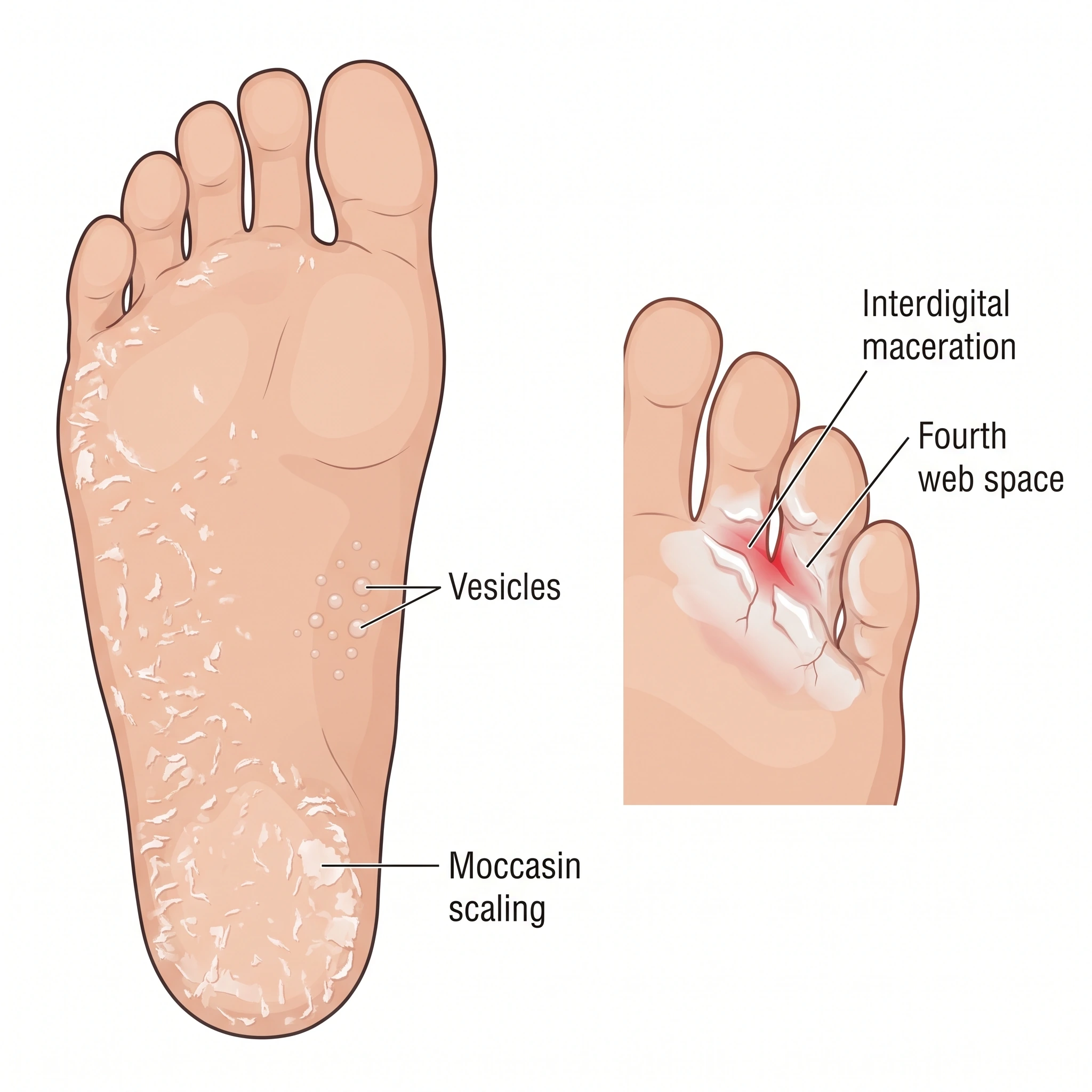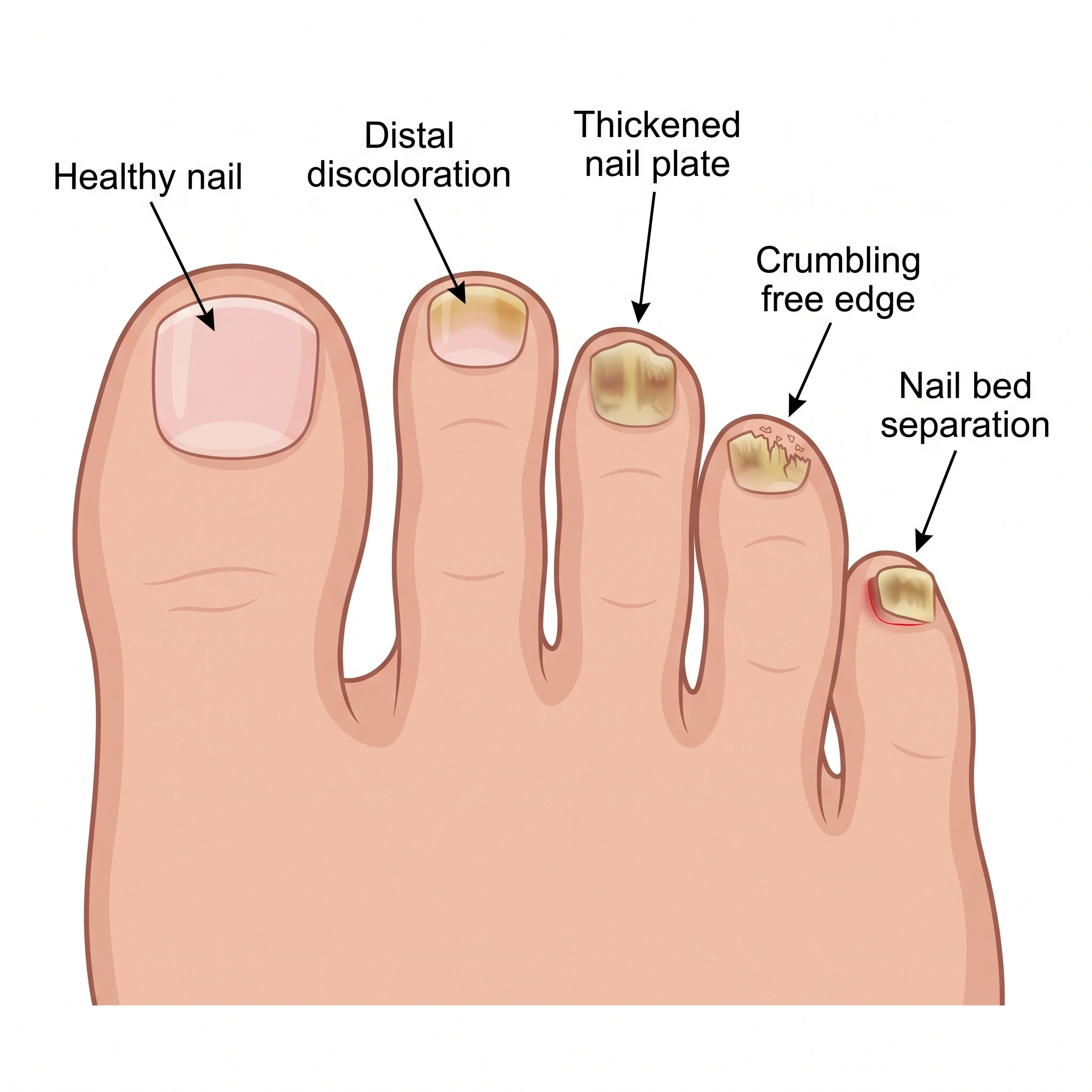
Toenail fungus, also called onychomycosis, is a fungal infection that makes a nail thick, yellow, brittle, or crumbly. Dr. Tine treats toenail fungus in Fort Lauderdale, confirming the diagnosis first and then choosing among topical medicine, oral medicine, laser treatment, and nail care based on how many nails are involved.
Stephanie Tine diagnoses and treats toenail fungus in Fort Lauderdale, from the first visit through recovery.
What is toenail fungus?
Toenail fungus is an infection of the nail by a fungus, usually the same family that causes athlete's foot.
It gets under the nail through a small separation or crack, then grows slowly in the warm, dark space inside a shoe. The nail turns yellow, white, or brown, thickens, and may crumble at the edge or lift away from the nail bed.
It is common, more so with age, and it spreads slowly. It is not dangerous for most people, but a thick nail can be painful in shoes and can be a doorway for bacterial infection in someone with diabetes or poor circulation.
Not every discolored nail is fungal. Injury, psoriasis, and other conditions can look similar, which is why confirming the diagnosis before months of treatment makes sense.
How is toenail fungus diagnosed?
Toenail fungus is usually suspected from the look of the nail and confirmed with a test.
Dr. Tine takes a small clipping or scraping from under the nail and sends it to a laboratory, or examines it under a microscope, to confirm a fungus is present and sometimes which one. This step matters because oral medicines are prescribed for months and are only worth taking when a fungus is actually the cause.

What can you expect from toenail fungus treatment?
Toenail fungus is slow to clear because a toenail takes many months to grow out fully.
Topical medicine is applied daily for up to a year. Oral medicine is taken for weeks to months and clears the infection more often than topical treatment, according to general guidance from the American Academy of Dermatology, at the cost of possible side effects your doctor will discuss with you. Laser treatment is an in-office option with no medicine. Whatever the route, the nail looks better only as clear nail grows in from the base, and the fungus can return if the skin or shoes are reinfected. These are ranges, not promises.
What are the treatment options?
- 01Regular trimming and thinning of the thickened nail, with dry socks and breathable shoesRegular trimming and thinning of the thickened nail, with dry socks and breathable shoes
- 02Over-the-counter or prescription antifungal nail lacquer or solution applied to the nail fOver-the-counter or prescription antifungal nail lacquer or solution applied to the nail for months
- 03Treating athlete's foot on the skin at the same time so it does not reinfect the nailTreating athlete's foot on the skin at the same time so it does not reinfect the nail
- 04Oral antifungal medicine for several weeks to months, with blood tests as advisedOral antifungal medicine for several weeks to months, with blood tests as advised
- 05Laser treatment of the nail, alone or combined with topical medicineLaser treatment of the nail, alone or combined with topical medicine
- 06Removal of a badly damaged nail so medicine can reach the nail bedRemoval of a badly damaged nail so medicine can reach the nail bed
What do patients ask most?
Is toenail fungus contagious?+
Will toenail fungus go away on its own?+
Which treatment works best for me?+
How long until my nail looks normal?+
Trained at Adventist Health White Memorial, Los Angeles (three-year foot and ankle surgical residency, Chief Resident). Sees patients in Fort Lauderdale.
About Dr. Tine →