A bunion is a bony bump at the base of the big toe that forms as the joint shifts out of alignment. Dr. Tine evaluates bunions in Fort Lauderdale and treats them, beginning with footwear changes, padding, and orthotics, and offering bunion surgery when pain limits daily life.
Stephanie Tine diagnoses and treats bunions in Fort Lauderdale, from the first visit through recovery.
What is Bunions?
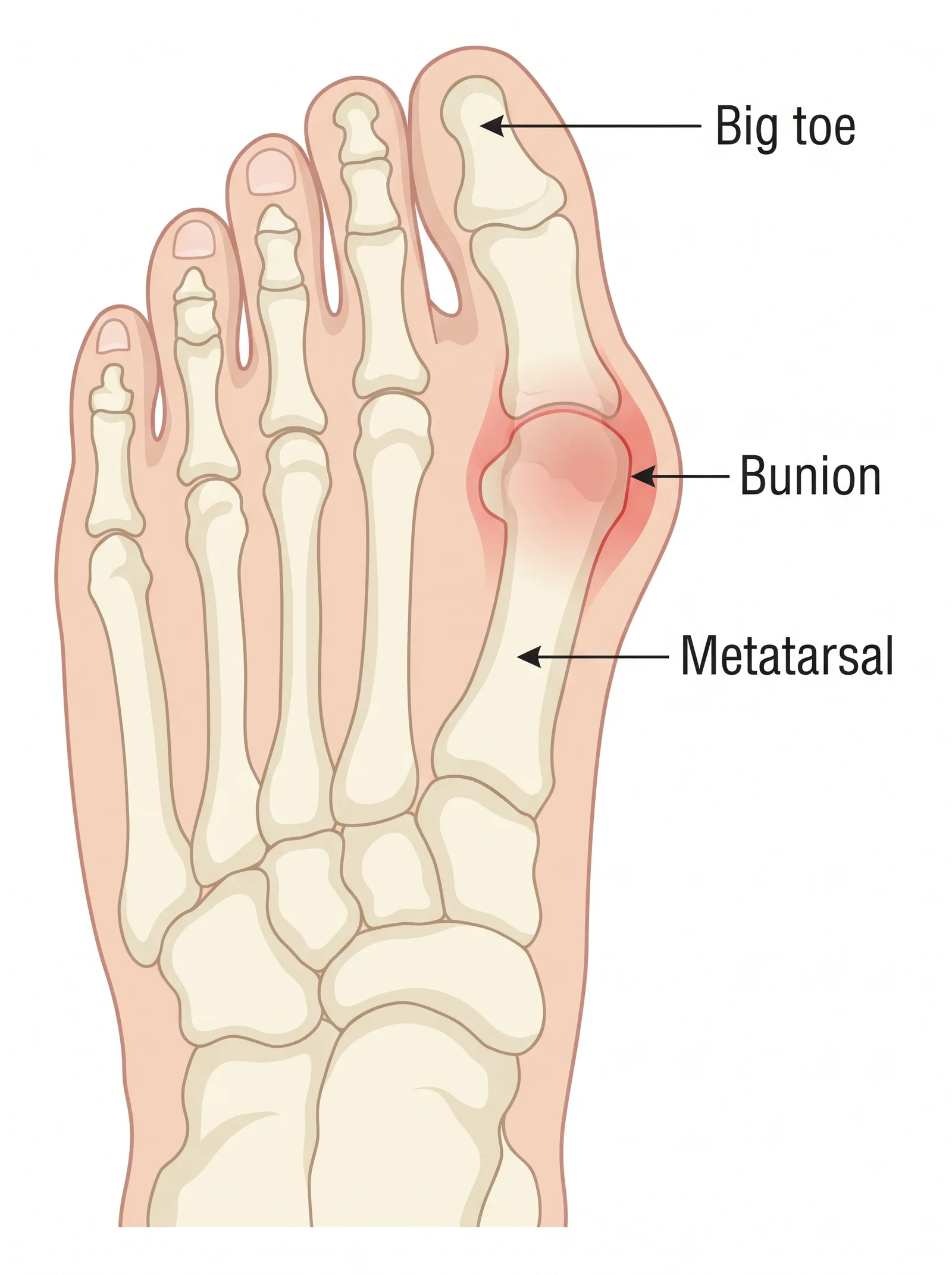
A bunion, also called hallux valgus, is a change in the joint at the base of the big toe.
Over time the big toe drifts toward the other toes and the joint pushes outward, forming a bony bump along the inside edge of the foot.
Bunions tend to develop slowly and can run in families, driven by the shape and mechanics of the foot. Tight or narrow shoes can make symptoms worse but are not the sole cause. The bump may become red, sore, and stiff, and the shifted toe can crowd the smaller toes.
A bunion does not always need treatment. Care is guided by how much pain and difficulty it causes, not by how the foot looks.
How is Bunions diagnosed, and what does the visit involve?
Bunions are diagnosed by exam and X-ray.
Dr. Tine looks at the alignment of the big toe, the size and tenderness of the bump, and how the joint moves. Weight-bearing X-rays, taken while you stand, show the true angle of the bones and how far the joint has shifted. That measurement guides whether non-surgical care is enough and, if surgery is needed later, which technique fits your foot.
What is recovery like for Bunions?
Non-surgical care does not reverse a bunion, but it often controls pain and slows irritation.
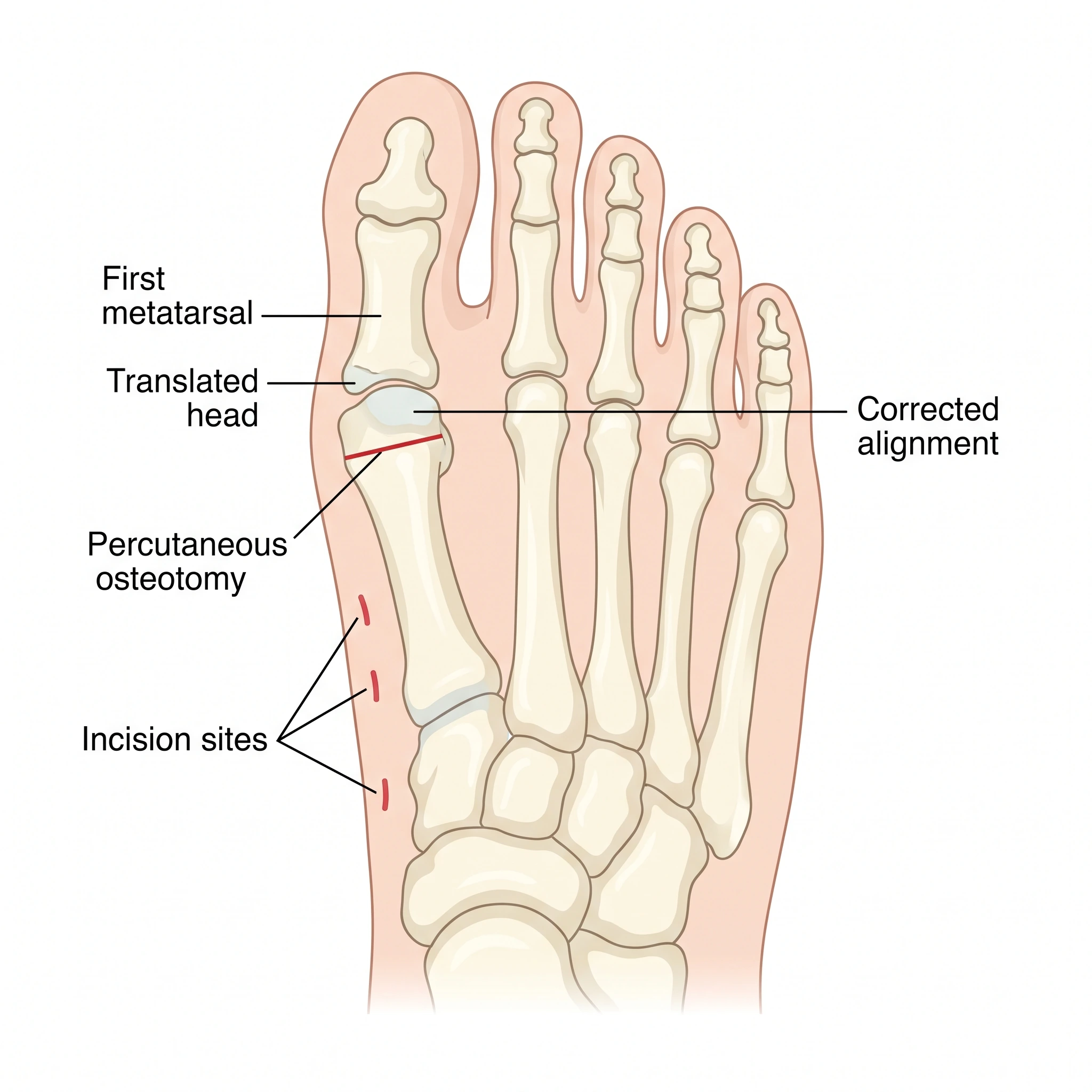
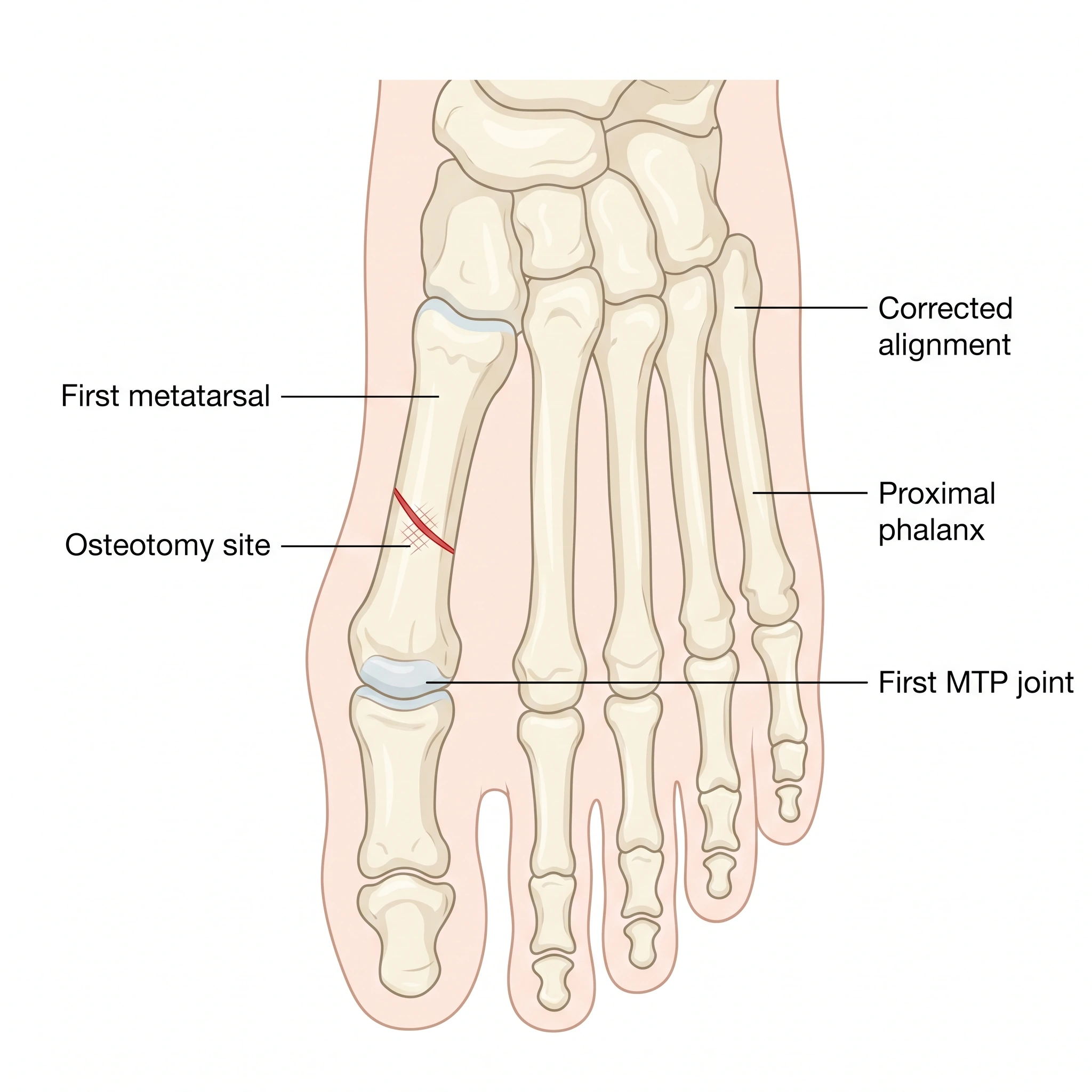
When surgery is chosen, correction restores alignment and relieves pressure. Return to comfortable shoes and normal walking after bunion surgery is commonly reported over several weeks to a few months, according to general guidance from the American Academy of Orthopaedic Surgeons. These are ranges, not promises.
What are the treatment options?
- 01Wider, softer shoes with a roomy toe box to reduce pressure on the jointWider, softer shoes with a roomy toe box to reduce pressure on the joint
- 02Bunion pads or spacers to cushion the bumpBunion pads or spacers to cushion the bump
- 03Orthotics, shoe inserts that support the foot and improve mechanicsOrthotics, shoe inserts that support the foot and improve mechanics
- 04Anti-inflammatory medicine for flare-upsAnti-inflammatory medicine for flare-ups
- 05Activity and footwear changes to lower daily irritationActivity and footwear changes to lower daily irritation
- 06Bunion surgery to realign the joint, considered when pain persists despite non-surgical caBunion surgery to realign the joint, considered when pain persists despite non-surgical care and limits walking or daily activity
What do patients ask most?
Do bunions always need surgery?+
Are tight shoes the cause of my bunion?+
Will a bunion keep getting worse?+
Can splints or spacers straighten a bunion?+
Trained at Adventist Health White Memorial, Los Angeles (three-year foot and ankle surgical residency, Chief Resident). Sees patients in Fort Lauderdale.
About Dr. Tine →