Minimally invasive bunion surgery corrects a bunion through several small incisions using a fine burr and X-ray guidance instead of one long incision. Dr. Tine performs minimally invasive bunion surgery in Fort Lauderdale for suitable bunions, after wider shoes, padding, and orthotics have been tried without lasting relief.
Stephanie Tine performs minimally invasive bunion surgery in Fort Lauderdale when it is the right step, and reviews every alternative with you first.
What is minimally invasive bunion surgery?
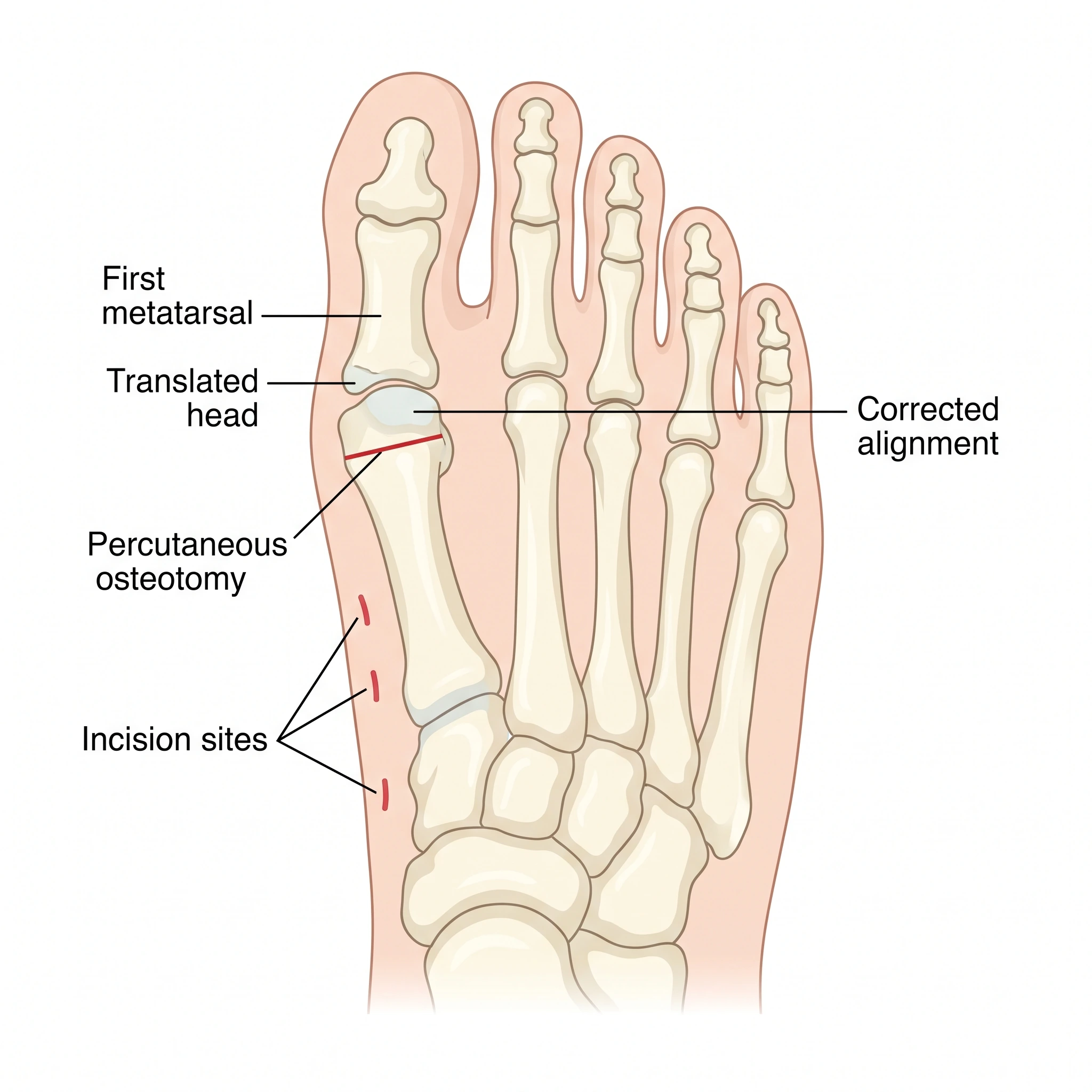
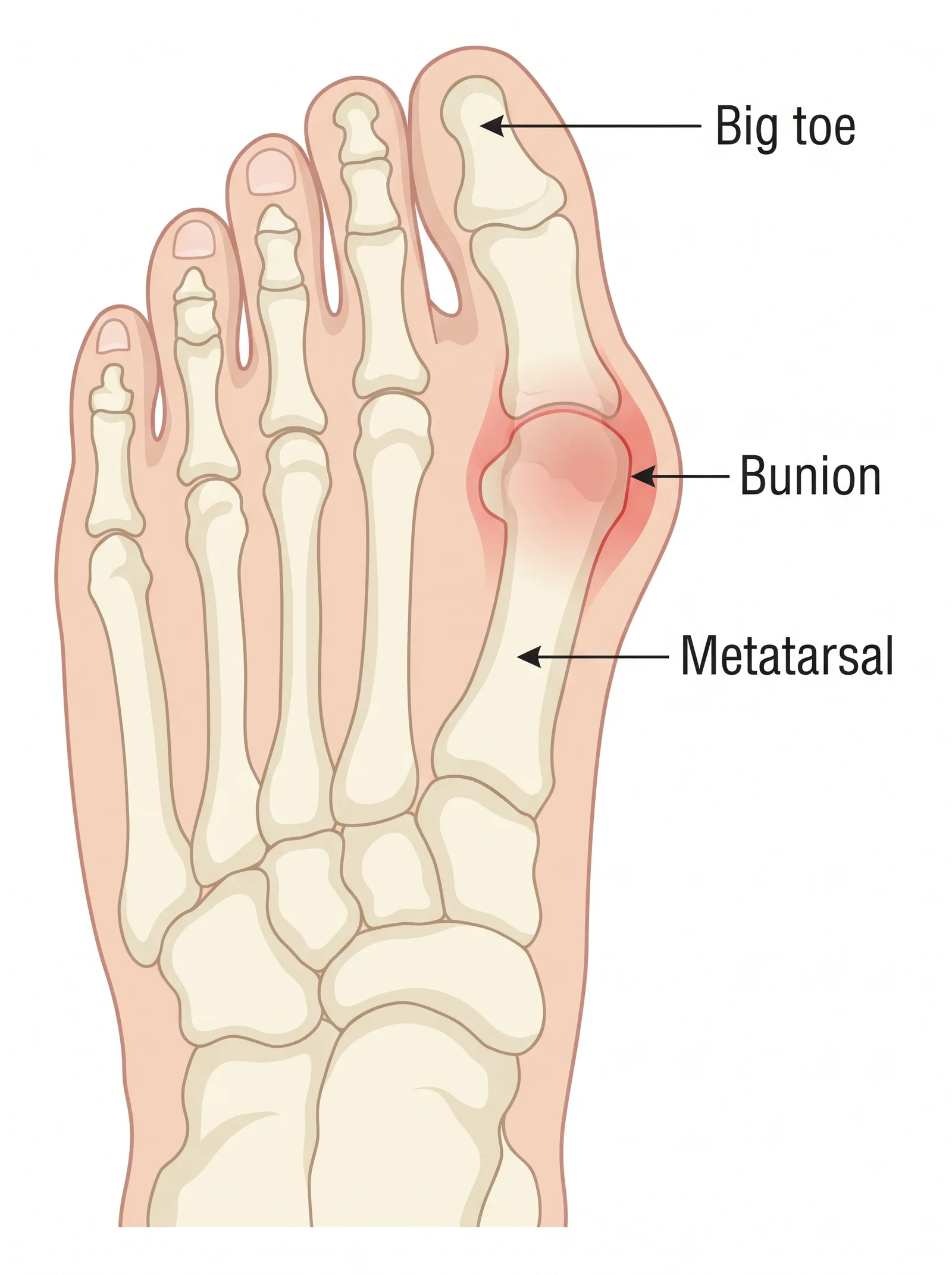
Minimally invasive bunion surgery corrects the alignment of the big toe through small incisions, each a few millimeters long, rather than through one long incision over the joint.
The surgeon uses a fine rotating burr to cut the bone, shifts the head of the first metatarsal into a corrected position, and fixes it with screws, watching each step on a live X-ray screen. The result is the same kind of correction as a traditional bunion operation, with less disturbance to the soft tissues over the joint.
It suits mild to moderate bunions, and some larger ones, depending on the bone's position. It is not right for every bunion: severe drift, arthritis in the big toe joint, or instability at the base of the metatarsal may need a different operation. Standing X-rays decide.
Dr. Tine is a podiatric physician and surgeon, a DPM: four years of podiatric medical school followed by a three-year hospital-based surgical residency. Read more about what a DPM is.
What happens during minimally invasive bunion surgery?
The procedure is done as an outpatient with a nerve block, often with sedation.
Through a small incision near the big toe joint, the surgeon passes a burr to cut the first metatarsal just behind its head, then slides the head sideways into a corrected position. One or two screws are placed through another small incision to hold it. When needed, the big toe bone itself is cut through a further small incision to straighten the toe. Each step is checked on X-ray during the operation. The incisions are closed with a stitch or a strip, and a dressing shapes the toe. The procedure commonly takes under an hour, though this varies.
What is recovery like after minimally invasive bunion surgery?
Most people are allowed to walk in a stiff surgical shoe right away, putting weight through the heel, because the screw fixation is stable.
The surgical shoe is worn for about four to six weeks while the bone heals, then most people move to a roomy athletic shoe as swelling allows. Time off work depends on the job: desk work often resumes within a week or two, and standing work takes longer. Swelling of the forefoot commonly lasts several months. Return to regular shoes and normal walking is commonly reported over a few months, according to general guidance from the American College of Foot and Ankle Surgeons. These are ranges, not promises. Dr. Tine will give you a weight-bearing plan specific to your foot.
Read the full guide to preparing for surgery →
Your own recovery instructions come from the office and are specific to you. This page describes the general course, not a plan to follow.
What are the treatment options?
- 01Wider, softer shoes with a roomy toe boxWider, softer shoes with a roomy toe box
- 02Bunion pads or toe spacers for comfortBunion pads or toe spacers for comfort
- 03Orthotics to support the footOrthotics to support the foot
- 04Anti-inflammatory medicine for flare-ups, when safe for youAnti-inflammatory medicine for flare-ups, when safe for you
- 05Activity and footwear changes to lower daily irritationActivity and footwear changes to lower daily irritation
- 06Minimally invasive or traditional bunion surgery, considered only when pain persists despiMinimally invasive or traditional bunion surgery, considered only when pain persists despite the steps above
What do patients ask most?
Is minimally invasive surgery less painful?+
Can I walk right after minimally invasive bunion surgery?+
Will I have a scar?+
Is minimally invasive surgery right for my bunion?+
Trained at Adventist Health White Memorial, Los Angeles (three-year foot and ankle surgical residency, Chief Resident). Sees patients in Fort Lauderdale.
About Dr. Tine →