A bunion is a bony bump that forms at the base of the big toe when the joint shifts out of line. It can cause pain, swelling, and trouble with shoes. Many people manage bunions without surgery, and surgery is an option when pain limits daily life.
Stephanie Tine diagnoses and treats bunions in Fort Lauderdale, from the first visit through recovery.
What is Bunions?
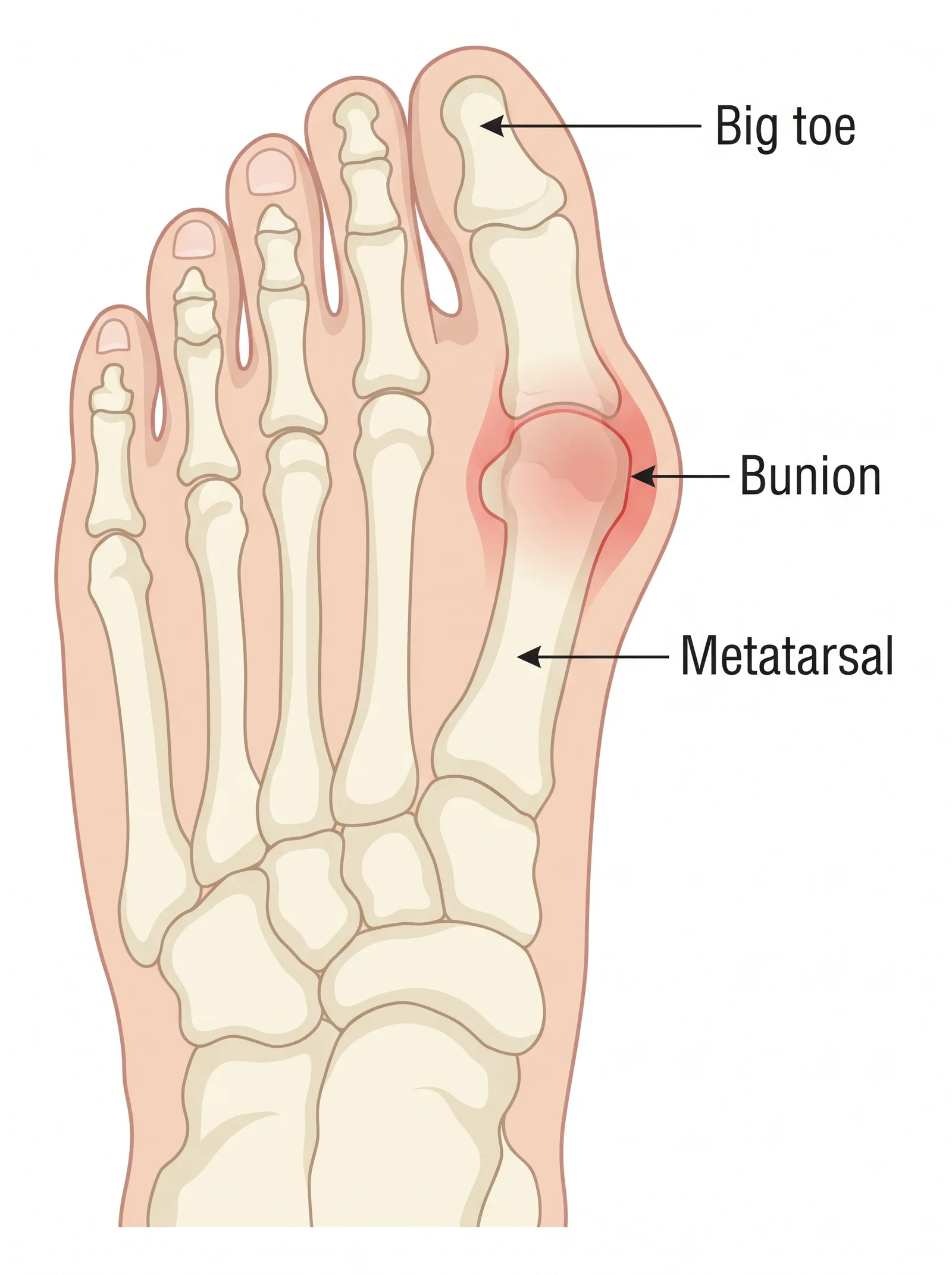
A bunion (medical name: hallux valgus, say: HAL-uks VAL-gus) is a change in the joint at the base of the big toe.
Over time, the big toe leans toward the second toe, and the joint at its base pushes outward. That outward push creates the bump most people picture when they hear the word bunion.
A bunion is not simply a growth on the side of the foot. It is a shift in the alignment of the bones and joint. The bump is the visible sign of that shift. Because the whole joint is involved, a bunion can affect how you walk and how your shoes fit, not just how the foot looks.
Bunions tend to develop slowly over years. They are more common in women and often run in families, which suggests that foot shape and structure play a large role. Tight or narrow shoes may make a bunion more uncomfortable, though the underlying tendency is usually inherited.
A smaller version can form on the outside of the foot at the base of the little toe. This is called a bunionette, and it follows similar principles.
Many people live with bunions comfortably for years with simple changes. When a bunion becomes painful enough to limit daily life, surgery can realign the joint. This page explains both paths. For a shorter overview of bunion care at the office of Stephanie Tine, see our bunion service page.
What are the symptoms of Bunions, and when should you see a specialist?
Bunions cause a mix of visible change and physical symptoms.
The bump itself is the most obvious sign, but the discomfort is what usually brings people in.
In everyday terms, you might notice:
- A bony bump on the inside of the foot at the base of the big toe. - Pain or soreness over the bump, especially in shoes. - Redness or swelling around the big toe joint. - The big toe leaning toward the second toe. - Trouble finding shoes that fit comfortably. - A callus or corn where toes rub together.
Bunions can also change over time. A joint that was only a cosmetic concern can start to ache with walking. Some people develop stiffness in the big toe as the joint changes.
You do not need to see a specialist the moment you notice a bunion. Many are mild and stable. Consider a visit if:
- Pain limits your activity or the shoes you can wear. - The bunion is getting larger or the toe is drifting more. - You have redness, swelling, or warmth that does not settle. - A sore or callus over the bump is not healing. - You have diabetes or poor circulation, since foot changes need closer watching.
Seeing a specialist early does not commit you to surgery. It gives you a clear picture of the joint and a plan to keep it comfortable.
How is Bunions diagnosed, and what does the visit involve?
Diagnosing a bunion is usually straightforward, but a good visit does more than confirm the obvious.
When you see Dr. Tine, the goal is to understand how much the joint has shifted and how it affects you.
Your specialist will likely ask about:
- When you first noticed the bunion and how it has changed. - Where and when it hurts. - Which shoes bother it and which feel fine. - Your activity and work. - Whether bunions run in your family.
The exam includes looking at the shape and position of the big toe, checking how far the joint bends, and pressing to find tender areas. Your specialist will also look at your other toes, since a bunion can crowd them, and watch how you stand and walk.
X-rays are commonly used for bunions. Standing X-rays show the angle of the bones and how far the joint has moved. This helps your specialist judge how mild or advanced the bunion is and, if surgery is ever considered, which type would fit your foot. X-rays also show whether arthritis, which is wear of the joint surface, has developed.
By the end of the visit, you should understand the size of the change in your joint and the options that make sense for you.
What does treatment for Bunions involve?
If you and your specialist decide on surgery, it helps to know the general sequence.
The exact steps depend on the technique chosen for your foot, but the outline below covers what most bunion surgery involves.
Step 1: Anesthesia. Bunion surgery is often done with a nerve block that numbs the foot, sometimes with medicine to help you relax. Your care team will explain the plan and answer your questions before you go back.
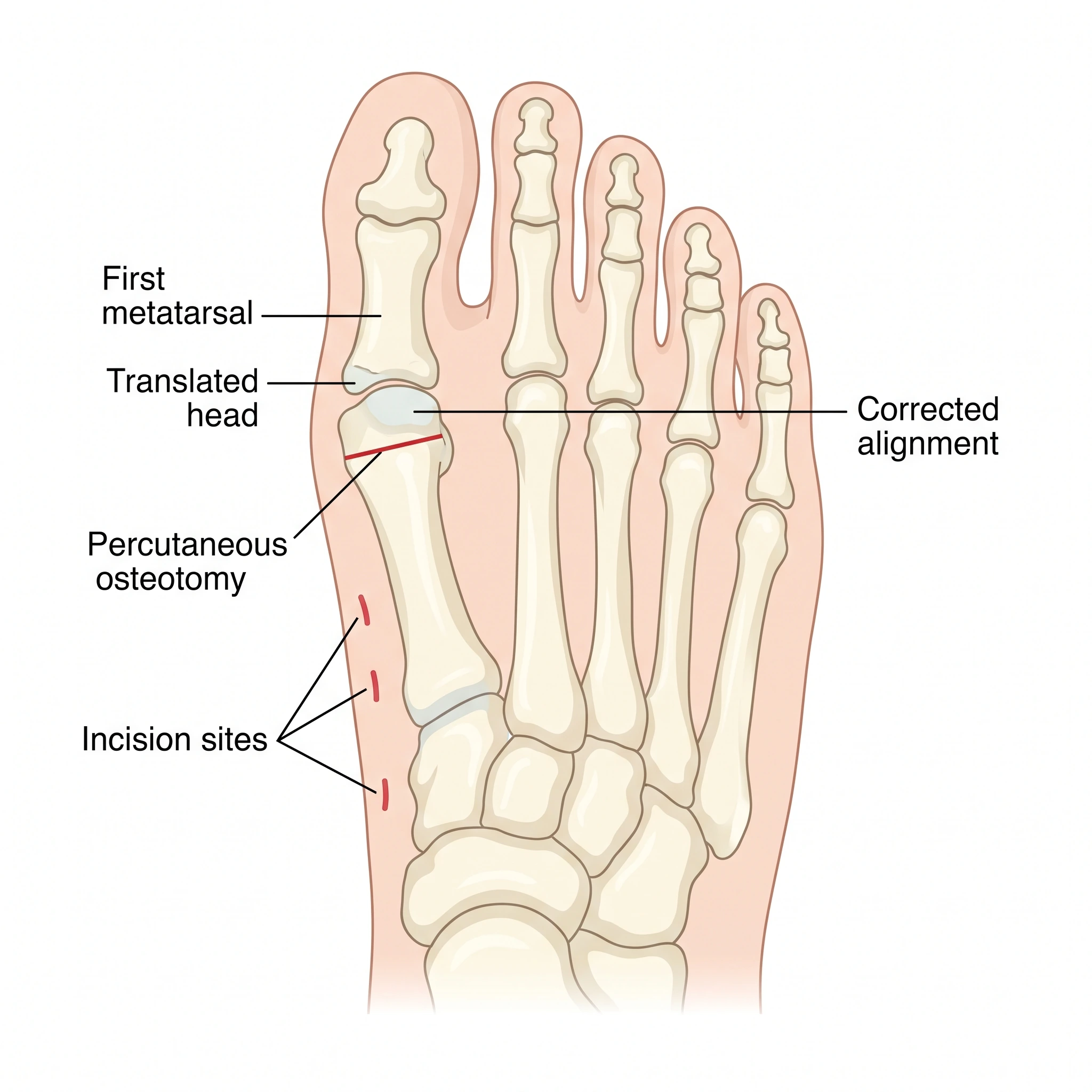
Step 2: Reaching the joint. The surgeon makes an incision near the big toe joint to reach the bones and soft tissue that have shifted.
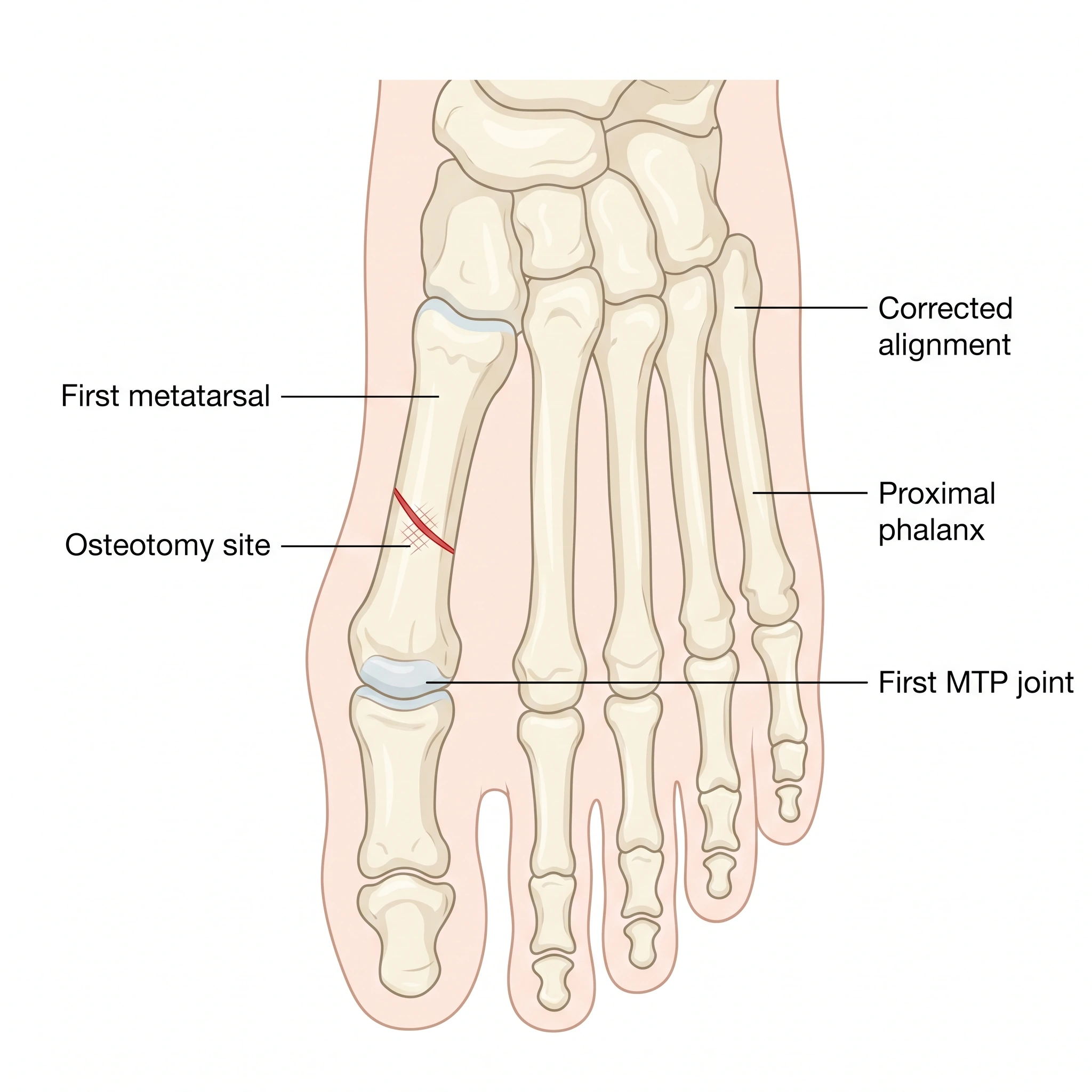
Step 3: Realigning the bones. The surgeon corrects the alignment. In many cases this means making a precise cut in the bone, called an osteotomy, and moving the bone into a straighter position. Soft tissue around the joint is balanced so the toe sits properly.
Step 4: Holding the correction. Small screws, pins, or a plate usually hold the bone in its new position while it heals. These are often left in place permanently and are not felt by most people.
Step 5: Closing. The incision is closed and a dressing is applied. You will usually go home the same day in a special surgical shoe or boot.
The whole procedure typically takes about an hour, though this varies. Your specialist will give you details specific to your surgery, including how much weight you can put on the foot afterward, which depends on the technique used.
What is the recovery timeline for Bunions?
Recovery from bunion surgery is a gradual process, and it is best measured by milestones you can reach rather than by dates alone.
The ranges below are typical, not promises.
Milestone 1: Protected walking. In the early weeks, you protect the foot in a surgical shoe or boot. Depending on the surgery, you may put some weight on the heel or outer foot while the bone heals.
Milestone 2: Swelling settles enough for regular shoes. As swelling goes down, you can move toward roomy, supportive regular shoes. Bunion surgery swelling is known for lasting a while, so patience helps here.
Milestone 3: Comfortable daily walking. You can walk for normal daily activities without the foot being the limiting factor.
Milestone 4: Return to exercise and most shoes. You can gradually return to higher activity and a wider range of shoes as comfort allows.
According to general guidance from the American Academy of Orthopaedic Surgeons, recovery from bunion surgery commonly takes several weeks to a few months for the bone to heal, and swelling can take several months to a year to fully settle. These are ranges, not promises. The bone healing must come first, which is why rushing back to tight shoes or high impact too early can cause problems.
Your specialist will guide when to advance each step based on how your foot is healing, not on a fixed calendar.
How should you prepare for surgery?
If you are planning bunion surgery, a little preparation at home makes recovery smoother.
Because you will be protecting the foot at first, thinking ahead pays off.
For transportation and time off:
- Arrange a ride home, since you cannot drive yourself after anesthesia. - Plan for someone to help at home for the first day or two. - Talk with your specialist about how long you should plan to be off work. This depends on your job and whether it involves standing.
For your home setup:
- Set up a comfortable spot where you can rest with the foot elevated, since keeping the foot up helps control swelling. - Keep the things you use often within easy reach so you do not have to walk more than needed. - Remove loose rugs and clear walkways to lower the risk of tripping while you are in a boot. - Have your surgical shoe or boot, any prescribed items, and easy meals ready before surgery day.
Ask the office ahead of time about which medicines to take or hold, when to stop eating before surgery, and what to bring. Getting these answers early removes stress on the day.
Which warning signs should you call about?
Most bunion surgery recoveries go smoothly, but some signs need prompt attention.
Knowing them ahead of time helps you act without second-guessing.
Call the office of Stephanie Tine at (754) 206-4753 if you have:
- Increasing pain that is not controlled by your prescribed plan. - Redness, warmth, or drainage from the incision, which can signal infection. - A fever. - Swelling that gets worse rather than better, especially with new pain. - Numbness or a color change in the toes. - A dressing or cast that feels too tight.
Some symptoms are urgent. Seek immediate care if you have calf pain and swelling, chest pain, or trouble breathing, since these can point to a blood clot, a rare but serious problem after foot surgery. If you cannot reach the office and have a worrying symptom, go to an urgent care or emergency room.
For people with diabetes or poor circulation, call sooner for any concern, since healing needs closer watching. When unsure, calling the office is always reasonable.
What results can you expect from Bunions?
Knowing what results are realistic helps you decide about surgery.
The numbers below come from published guidance, and each is a range, not a promise.
According to general guidance from the American Academy of Orthopaedic Surgeons, most people who have bunion surgery for pain report good relief and satisfaction with the result. These are ranges, not promises, and outcomes depend on the technique, the starting severity, and how closely the recovery plan is followed.
It is also honest to note that bunion surgery is done mainly to relieve pain and restore function, not for appearance alone. A bunion can, in a small number of cases, return over time, and full swelling can take many months to settle. Your specialist will discuss what the evidence suggests for your specific foot, using sourced ranges rather than guarantees.
The balanced summary is this: for a painful bunion that limits daily life, surgery relieves pain for most people, recovery takes patience, and results are best when the healing plan is respected.
What are the treatment options?
- 01Roomier shoesShoes with a wide, deep toe box give the bunion space and reduce pressure. This is often the single most helpful change. Avoiding narrow, pointed, or high-heeled shoes usually eases pain.
- 02Padding and spacersA pad over the bump can reduce rubbing. A soft spacer between the big and second toes can improve comfort for some people.
- 03Inserts and orthoticsArch supports or custom orthotics can improve how your foot carries weight and may ease pressure on the joint.
- 04Ice and anti-inflammatory medicineIce after activity and over-the-counter pain relievers can calm a flare. Your doctor can tell you whether these medicines are safe for you.
- 05Activity changesCutting back on activities that flare the joint, while staying active in gentler ways, can help during a painful stretch.
What do patients ask most?
What do patients ask about Bunions?+
Trained at Adventist Health White Memorial, Los Angeles (three-year foot and ankle surgical residency, Chief Resident). Sees patients in Fort Lauderdale.
About Dr. Tine →