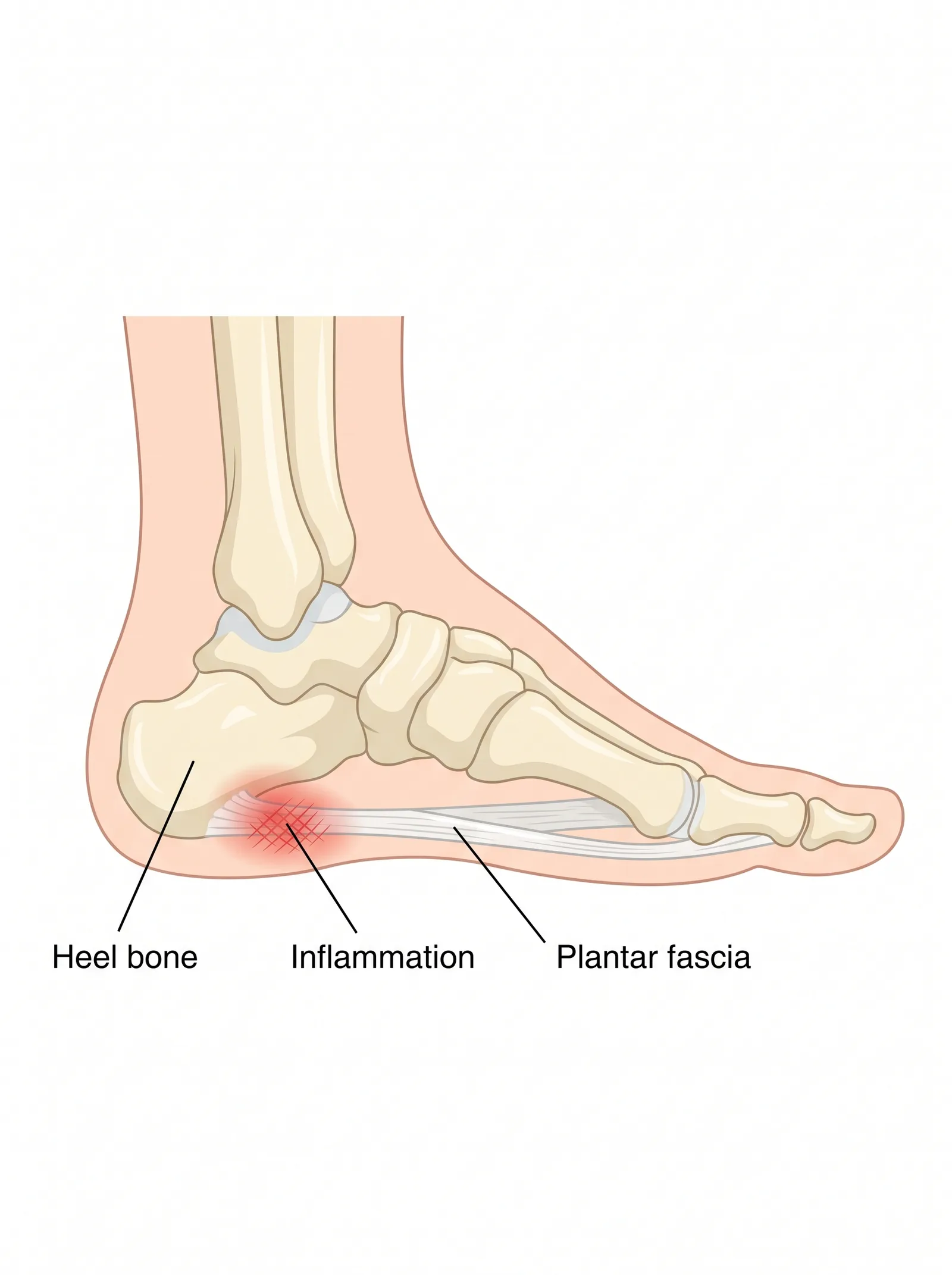
Plantar fasciitis is irritation of the thick band of tissue along the bottom of your foot. It often causes sharp heel pain with the first steps in the morning. Most people improve with rest, stretching, and simple changes, though healing can take several months.
Stephanie Tine diagnoses and treats plantar fasciitis in Fort Lauderdale, from the first visit through recovery.
What is Plantar Fasciitis?
Plantar fasciitis (say: PLAN-tar fash-ee-EYE-tis) is one of the most common causes of heel pain.
The plantar fascia is a strong, flat band of tissue. It runs from your heel bone to the base of your toes and helps support the arch of your foot. When this band is overloaded, small areas of it can become irritated and painful.
The word "itis" usually means inflammation, which is the body's response to injury. In plantar fasciitis, though, studies now show the tissue is often worn or strained rather than swollen. This is why the problem is sometimes called plantar fasciosis. The name matters less than the cause: the tissue is being asked to do more than it can handle, and it needs time and support to recover.
This condition can affect anyone, but it is common in adults who are on their feet a lot, runners, and people who have gained weight. It can happen in one foot or both. The pain often builds slowly rather than starting with one clear injury.
The good news is that most people get better without surgery. The harder news is that recovery is usually measured in months, not days. Understanding why the tissue hurts, and what helps it heal, makes the process easier to stick with.
This page is the in-depth guide. For a shorter overview of how the office of Stephanie Tine treats heel pain, see our plantar fasciitis service page.
What are the symptoms of Plantar Fasciitis, and when should you see a specialist?
The most familiar sign of plantar fasciitis is heel pain with your first steps in the morning.
Many people describe it as a sharp or stabbing feeling right under the heel. After a few minutes of walking, the pain often eases. It can return after you sit for a while and then stand up, or late in the day after a lot of standing.
In your own words, you might notice:
- A sharp pain under the heel with the first steps out of bed. - Pain that eases as you move but comes back after rest. - A deep ache in the heel after standing or walking for a long time. - Tenderness when you press on the bottom of the heel. - Pain that gets worse, not better, over several weeks.
Plantar fasciitis usually does not cause numbness, tingling, or pain that shoots up the leg. If you have those symptoms, something else may be going on, such as a pinched nerve. That is one reason a specialist visit can help.
It is reasonable to try simple steps at home for a few weeks, such as rest, supportive shoes, and gentle stretching. Consider seeing a foot and ankle specialist if:
- Heel pain lasts more than three to four weeks despite home care. - The pain is severe enough to change how you walk. - You cannot put weight on the heel. - You have swelling, redness, or warmth in the heel. - You have diabetes or poor circulation, which can change how foot problems are managed.
Seeing a specialist does not mean you are heading toward surgery. Most of what a specialist does for this condition is guide non-surgical care and rule out other causes of heel pain.
How is Plantar Fasciitis diagnosed, and what does the visit involve?
Diagnosing plantar fasciitis is mostly about listening and examining, not high-tech testing.
When you see Dr. Tine, the visit usually includes a conversation and a hands-on exam.
Your specialist will likely ask:
- When the pain started and how it has changed. - What makes it better or worse. - Your daily activity, work, and exercise. - The shoes you wear most. - Any past foot or ankle injuries.
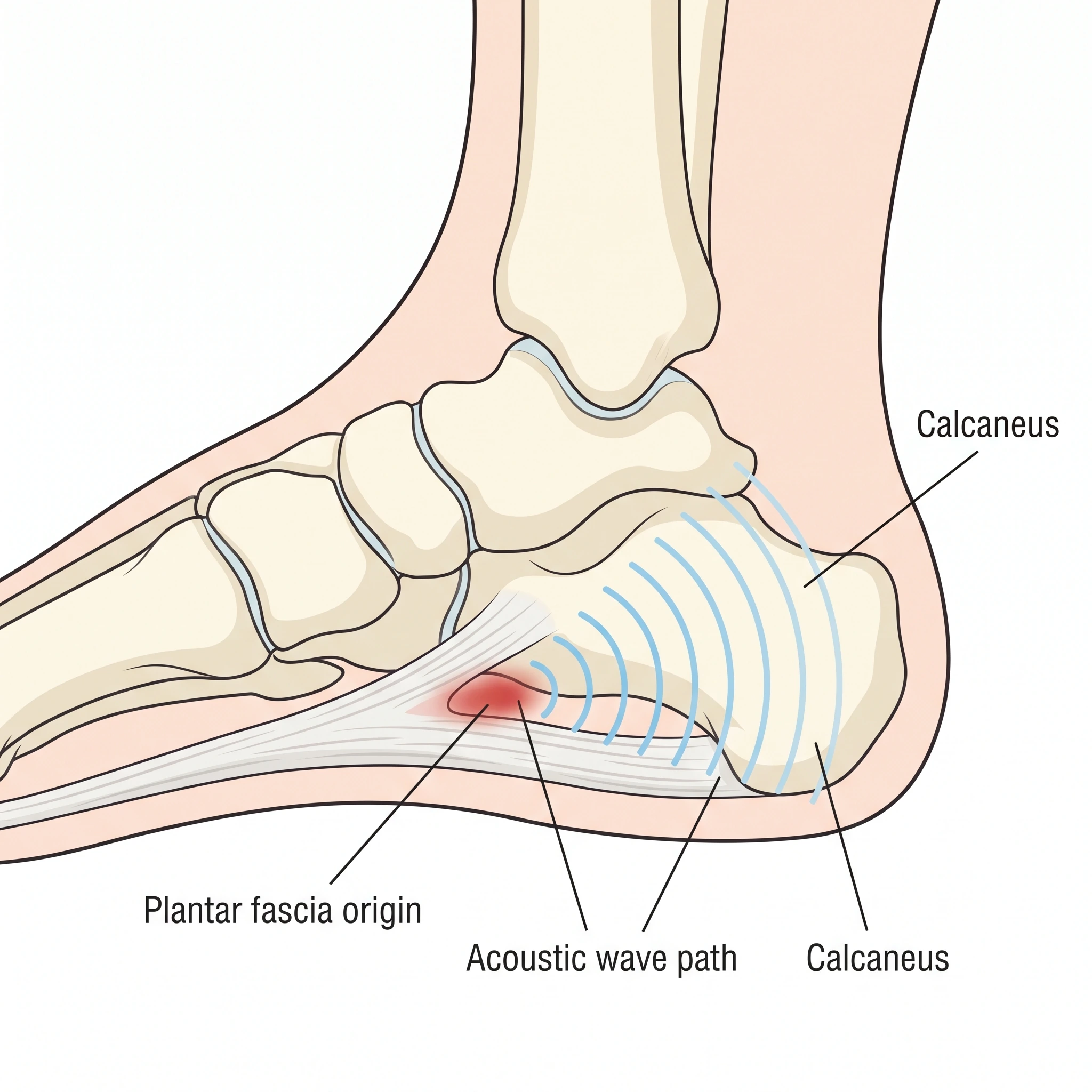
During the exam, your specialist will gently press along the bottom of the heel and arch to find the tender spot. They will check how far your ankle and toes bend, since tight calf muscles are often part of the picture. They may watch you stand and walk to see how your foot moves.
Imaging is not always needed. An X-ray does not show the plantar fascia itself, but it can rule out other problems, such as a stress fracture, if the story does not fit. Some people have a bony bump on the heel called a heel spur. Heel spurs are common and often cause no pain, so finding one does not confirm the diagnosis. Ultrasound or MRI, which are pictures of soft tissue, are used only in cases that do not improve as expected.
The goal of the visit is a clear diagnosis and a plan you understand. You should leave knowing what is causing your pain and what the first steps of treatment are.
What is the natural course of Plantar Fasciitis?
Plantar fasciitis is a condition, not a single event, so it helps to know how it tends to move over time.
Early on, the pain is often worst with the first steps of the day and after rest. Many people push through, which is understandable, but continuing high-impact activity can keep the tissue irritated. This is the stage where simple changes have the most power.
With steady care, the sharp morning pain usually softens first. You may notice you can take more steps before it flares. Over weeks, the tender spot becomes less sensitive. Setbacks are normal. A long day on your feet or a return to hard exercise too soon can bring pain back for a day or two. This does not mean you are back to square one.
Left alone, plantar fasciitis often improves on its own over time, but that time can be long and uncomfortable. Active care usually makes the road smoother and shorter. The tissue heals gradually, which is why patience and consistency matter more than any single treatment.
What is the recovery timeline for Plantar Fasciitis?
Recovery from plantar fasciitis is best measured by what you can do, not only by the calendar.
Everyone heals at their own pace. The milestones below describe progress by ability. The time ranges are typical, not promises.
Milestone 1: Morning pain eases. You can take your first steps of the day with much less sharp pain. This is often the first sign that care is working.
Milestone 2: Daily activity is comfortable. You can stand, walk, and do normal errands without the heel dominating your day.
Milestone 3: Return to exercise. You can gradually return to running or higher-impact activity, building up slowly rather than jumping back to your old level.
Milestone 4: Full comfort. The heel feels normal, and you can be on your feet or exercise without the pain returning.
According to general guidance from the American Academy of Orthopaedic Surgeons, most people with plantar fasciitis improve within several months to about a year of non-surgical care. These are ranges, not promises. Some people feel much better within a few weeks, and others take longer, especially if the condition has been present for a while before treatment began.
The most common reason recovery stalls is stopping the stretches and support once the pain eases. Keeping up the basics, even after you feel better, protects your progress.
How should you prepare for your visit?
You do not need special preparation for a plantar fasciitis visit, but a little planning makes the appointment more useful.
Before you come in, it helps to:
- Bring the shoes you wear most often, including work and exercise shoes. Wear patterns tell a story. - Note when the pain is worst and what makes it better. - Write down anything you have already tried, such as inserts or stretches, and whether it helped. - Make a list of your activities, including work, standing time, and exercise. - Bring any inserts or orthotics you already use.
If you have had imaging done elsewhere, bring the images or reports. Also bring a list of your current medicines. Wearing or bringing shorts or loose pants makes it easier to examine your ankle and calf.
Coming prepared helps your specialist find the right plan faster.
Which warning signs should you call about?
Plantar fasciitis is not usually an emergency, but some signs mean you should reach out to the office rather than waiting.
Call the office of Stephanie Tine at (754) 206-4753 if you have:
- Heel pain that gets worse despite following your plan. - New swelling, redness, or warmth in the heel or foot. - Pain that spreads, or numbness and tingling in the foot. - A sudden pop or sharp pain, which could point to a different injury. - Fever along with foot pain.
Some symptoms need faster attention. Seek urgent medical care if you have severe pain after an injury, cannot bear weight at all, or have signs of infection such as spreading redness and fever. If you have diabetes or poor circulation, call sooner rather than later for any new foot problem, since these conditions can change how quickly a small issue becomes serious.
When in doubt, calling the office is the right move. Our team can help decide whether you need to be seen.
What results can you expect from Plantar Fasciitis?
It helps to know what results are realistic.
The numbers below are drawn from published guidance, and each is a range, not a promise.
According to general guidance from the American Academy of Orthopaedic Surgeons, the large majority of people with plantar fasciitis improve with non-surgical care, and surgery is needed in only a small share of cases. These are ranges, not promises, and your own result depends on many factors, including how long you have had symptoms.
Because non-surgical care works for most people, the goal for nearly everyone is steady improvement through simple, consistent steps. When treatments beyond the basics are needed, your specialist will walk you through what the evidence suggests for your situation, using sourced information rather than guarantees.
The honest summary is this: most people get better, it usually takes patience, and the plan works best when you stay with it.
What are the treatment options?
- 01Rest and activity changesThis does not mean stopping all activity. It means cutting back on the things that overload the tissue, such as long runs or long hours on hard floors, while you heal. Low-impact activity like swimming or cycling often stays comfortable.
- 02StretchingGentle stretches for the calf and the plantar fascia are one of the most helpful parts of care. A common one is a calf stretch against a wall. Another is pulling your toes back toward your shin to stretch the arch. Doing these a few times a day, especially before the first steps in the morning, can make a real difference.
- 03Supportive shoes and insertsShoes with good arch support and cushioning take strain off the tissue. Over-the-counter arch supports work well for many people. Some do better with custom inserts, called orthotics, which are shaped to your foot.
- 04IceRolling your foot over a frozen water bottle or using an ice pack can ease pain, especially after activity.
- 05Night splintsA night splint gently holds your foot with the toes pointed up while you sleep. This keeps the tissue from tightening overnight, which can reduce that first-step morning pain.
- 06Anti-inflammatory medicineOver-the-counter pain relievers can help with discomfort. Your specialist or primary doctor can tell you whether these are safe for you.
- 07Physical therapyA physical therapist can guide stretching and strengthening and check how you move.
What do patients ask most?
What do patients ask about Plantar Fasciitis?+
Trained at Adventist Health White Memorial, Los Angeles (three-year foot and ankle surgical residency, Chief Resident). Sees patients in Fort Lauderdale.
About Dr. Tine →