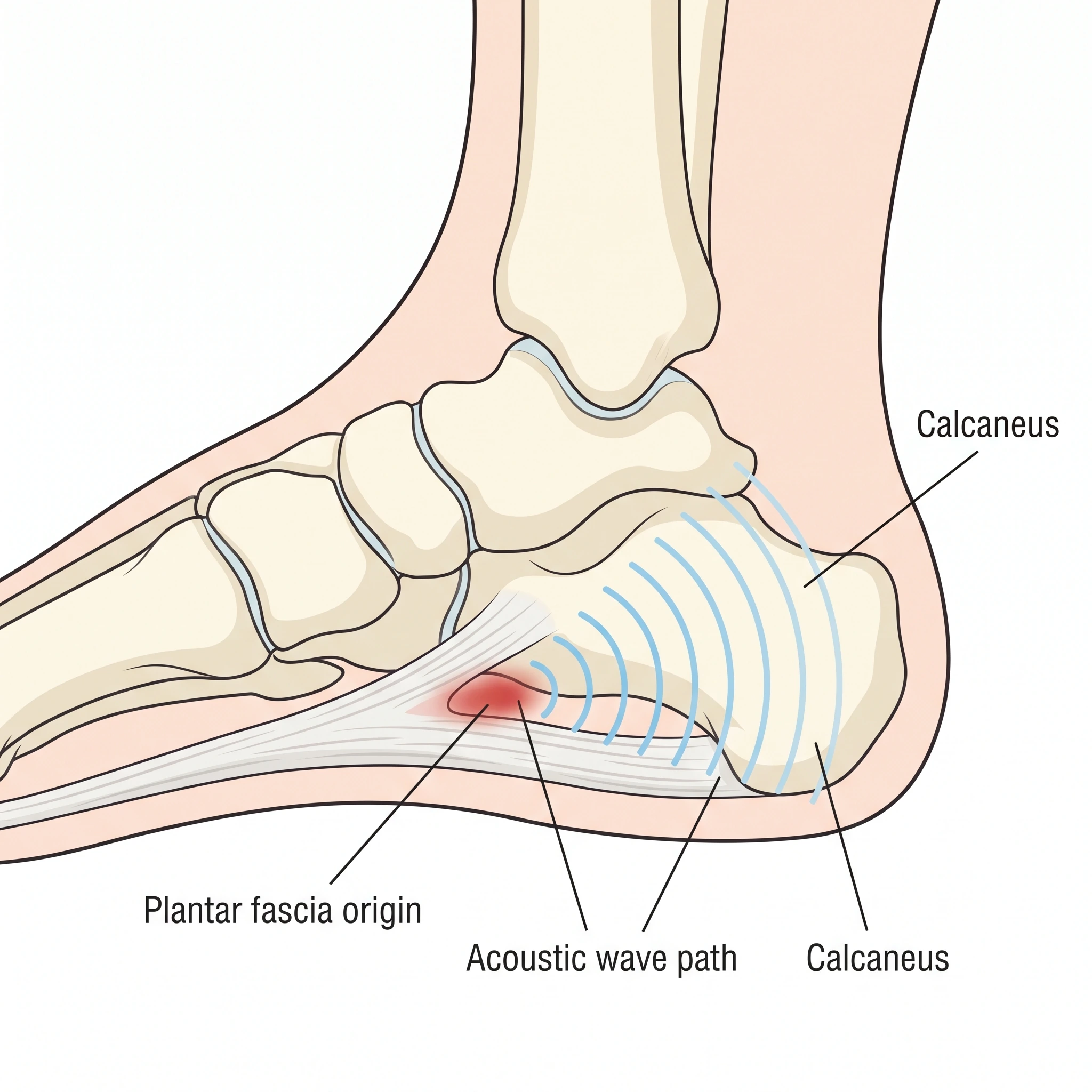
Shockwave therapy, also called EPAT, sends pressure waves through the skin into a chronically irritated tendon or fascia to stimulate healing, with no incision and no medicine. Dr. Tine offers shockwave therapy in Fort Lauderdale for plantar fasciitis and Achilles tendinopathy that have lasted months despite stretching and footwear changes.
Stephanie Tine performs shockwave therapy (epat) in Fort Lauderdale when it is the right step, and reviews every alternative with you first.
What is shockwave therapy?
Shockwave therapy uses a handheld device pressed against the skin to deliver a series of pressure waves into the painful tissue.
The waves are thought to stimulate blood flow and a healing response in tendon or fascia that has become worn and degenerated rather than acutely inflamed. It is done in the office over a few sessions, without needles, incisions, or medicine.
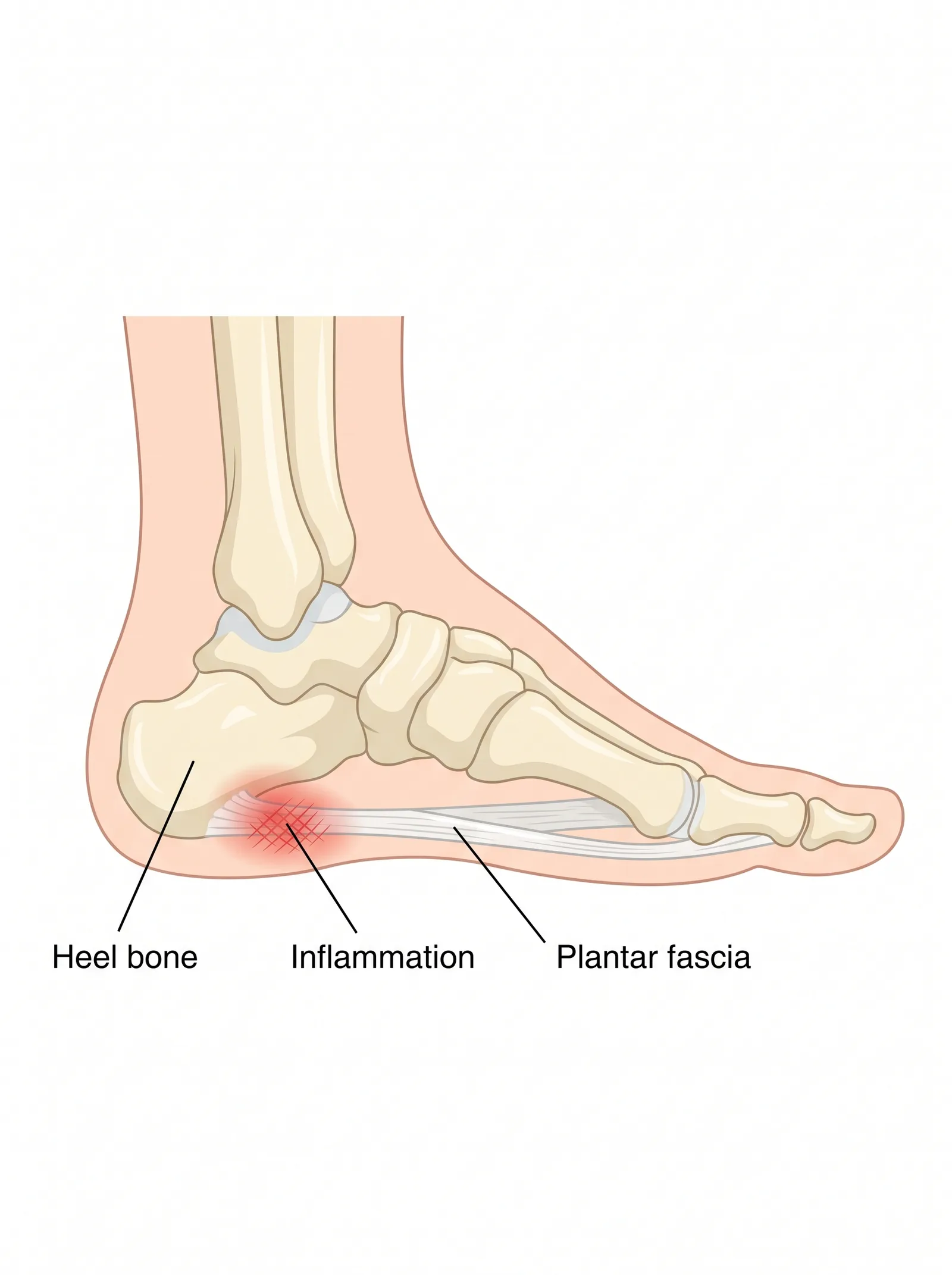
It is used most for plantar fasciitis that has lasted more than a few months and for Achilles tendinopathy in the middle of the tendon, when stretching, footwear, and a loading program have not settled the pain. It is an alternative to injections and a step before surgery is considered.
The evidence for shockwave in chronic plantar fasciitis is reasonably good, and for Achilles tendinopathy it is fair. It does not help everyone, and the effect builds over weeks.
What happens during shockwave therapy?
You lie or sit with the foot exposed.
Dr. Tine locates the most tender spot, applies gel to the skin, and holds the device against it while it delivers a few thousand pulses over several minutes. The sensation is a firm, rapid tapping that is uncomfortable but tolerable; the intensity is adjusted to what you can accept. No anesthetic is needed. A session commonly takes about ten to fifteen minutes, and a course is usually three to five sessions a week apart.
What is recovery like after shockwave therapy?
There is no downtime.
Most people walk out and return to work and normal activity the same day, with the treated area sometimes sore for a day or two. Anti-inflammatory medicine is usually avoided during the course because it may blunt the healing response. You keep up your stretching and loading program between sessions. Improvement, when it comes, builds over the weeks following the course rather than immediately. According to general guidance from the American Podiatric Medical Association, many people with chronic plantar fasciitis report meaningful relief after a course of shockwave, and some do not respond. These are ranges, not promises.
Read the full guide to preparing for surgery →
Your own recovery instructions come from the office and are specific to you. This page describes the general course, not a plan to follow.
What are the treatment options?
- 01Stretching, supportive footwear, and activity changes for several weeksStretching, supportive footwear, and activity changes for several weeks
- 02A structured loading program for the tendon or fasciaA structured loading program for the tendon or fascia
- 03Physical therapyPhysical therapy
- 04Orthotics or a night splintOrthotics or a night splint
- 05Shockwave therapy for pain that has lasted months despite the steps aboveShockwave therapy for pain that has lasted months despite the steps above
- 06Surgery, rarely, for problems that have not responded to any non-surgical careSurgery, rarely, for problems that have not responded to any non-surgical care
What do patients ask most?
Does shockwave therapy hurt?+
How many sessions will I need?+
Who should not have shockwave therapy?+
Is shockwave covered by insurance?+
Trained at Adventist Health White Memorial, Los Angeles (three-year foot and ankle surgical residency, Chief Resident). Sees patients in Fort Lauderdale.
About Dr. Tine →