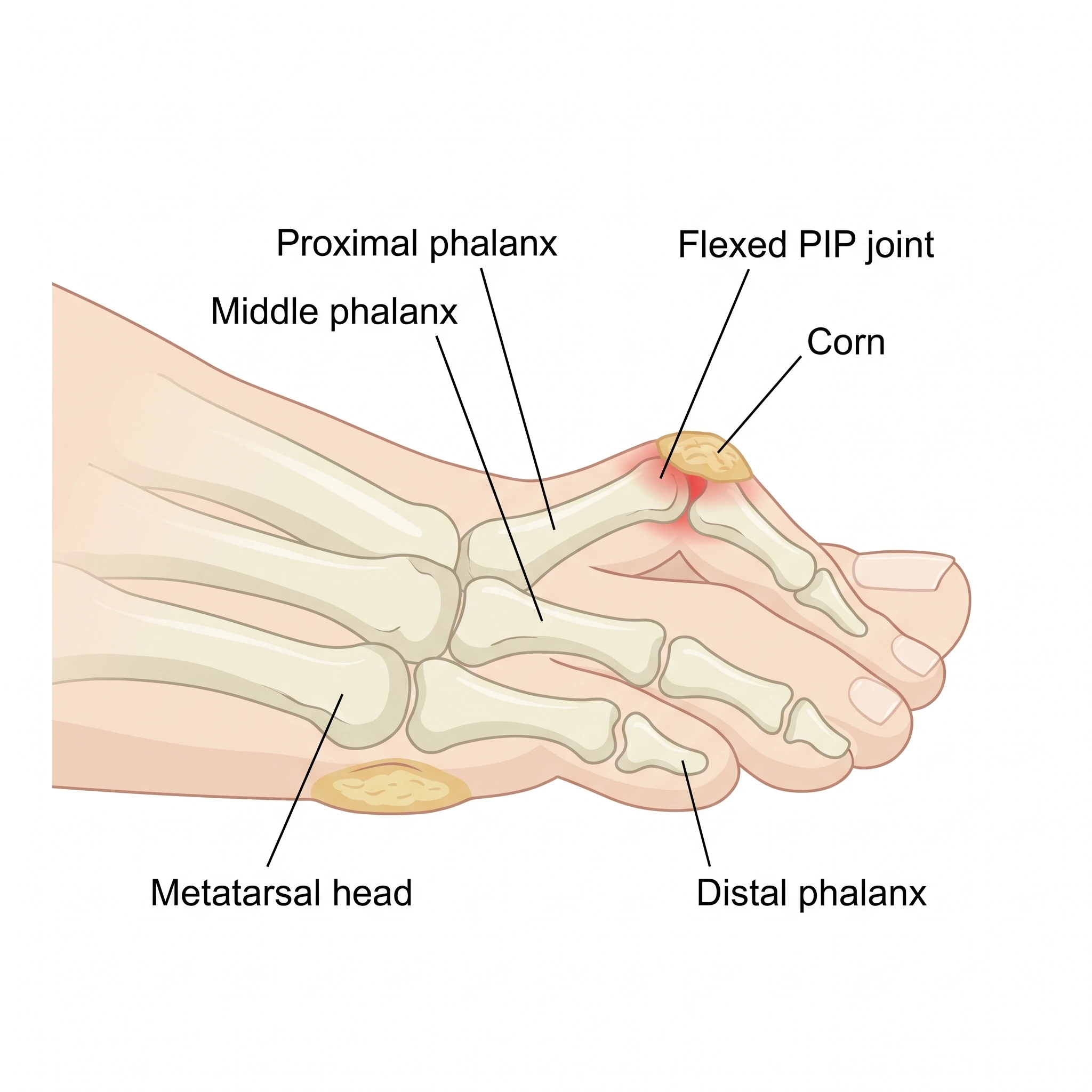
A bunion is a bony bump at the base of the big toe that forms when the joint drifts out of line. Bunion surgery, called a bunionectomy, realigns the bone and soft tissue to ease pain and improve fit in shoes. Surgery is considered after non-surgical care.
Stephanie Tine performs bunion surgery in Fort Lauderdale when it is the right step, and reviews every alternative with you first.
What is Bunion Surgery?
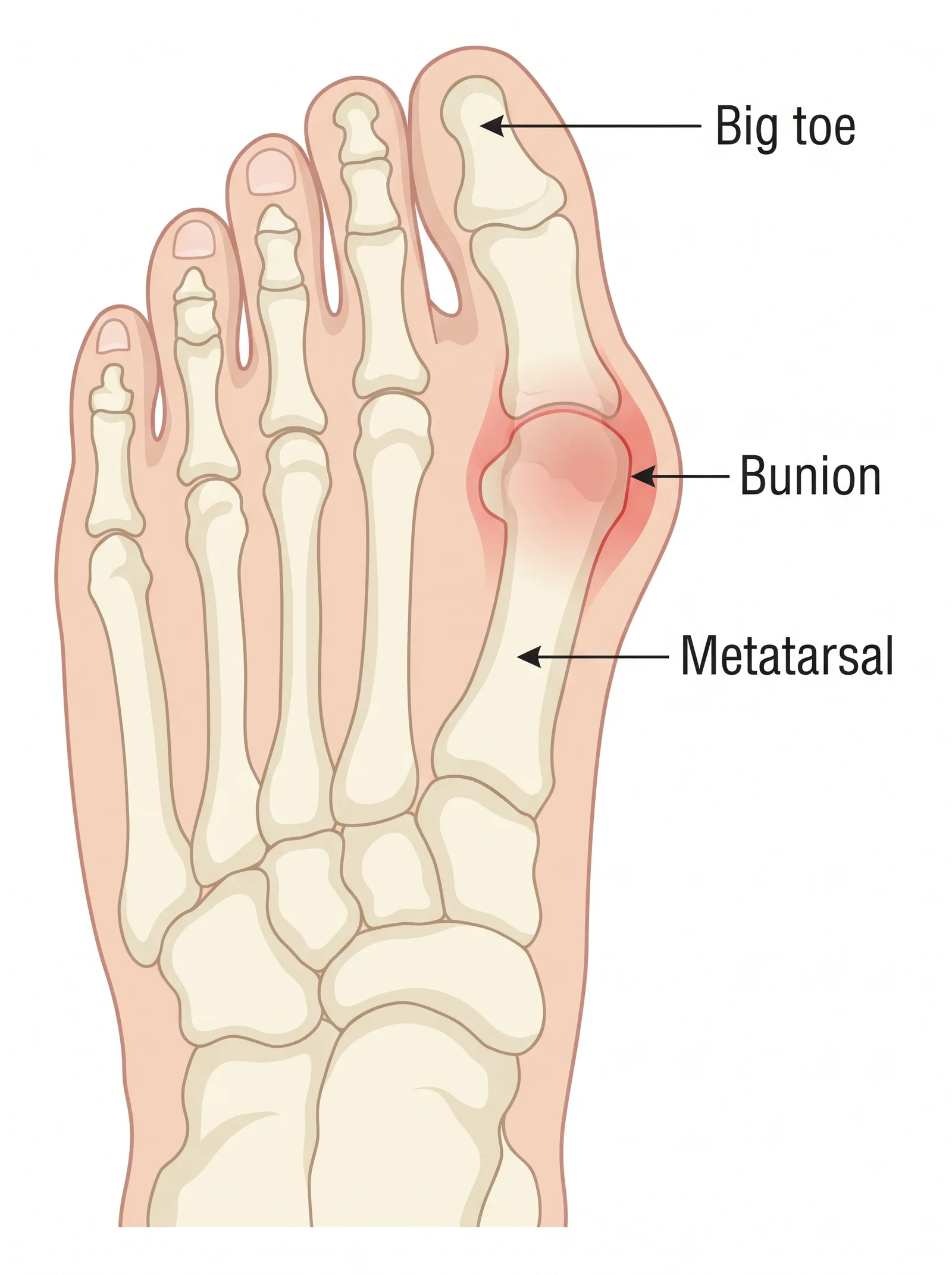
A bunion, also called hallux valgus, is a change in the joint at the base of the big toe.
Hallux valgus is the medical name; it means the big toe leans toward the second toe while the joint at its base pushes outward. Over time this makes a bump on the inside edge of the foot. The bump is bone and swollen tissue, not a growth.
Bunions usually form slowly. Foot shape that runs in families, the way you walk, and years of pressure all play a part. Tight or narrow shoes do not create a bunion on their own, but they can make one hurt more. Many people have a mild bunion for years with little trouble.
Bunion surgery is a group of procedures that share one goal: to move the bones back toward a straighter line and to balance the soft tissue around the joint. Soft tissue means the muscles, tendons, and ligaments that hold the joint in place. The surgeon chooses the method based on how far the joint has drifted, whether the joint has arthritis (joint surface wear), and your activity level. There is no single operation that fits every foot.
Surgery is not the first step. It is considered when pain limits daily walking or standing, when the toe is crossing under or over its neighbor, or when non-surgical care has been tried and has not helped enough. The aim is a foot that is comfortable in a normal shoe, not a cosmetic change.
What are the symptoms of Bunion Surgery, and when should you see a specialist?
In plain words, here is what people with a bunion often notice the following.
- A firm bump on the inside of the foot at the base of the big toe. - Aching or burning around the joint, worse after standing or walking. - Redness or swelling over the bump, sometimes from shoe rubbing. - The big toe leaning toward the second toe, or starting to overlap it. - Trouble finding shoes that fit without pressing on the bump. - Stiffness in the big toe joint.
It is reasonable to see a foot and ankle specialist when pain interrupts your usual walking or standing, when the toe is changing position, or when calluses and corns keep forming from the toes rubbing. You do not need to wait until the pain is severe. An earlier visit gives you more non-surgical choices.
Some signs deserve a prompt call rather than a wait: skin that breaks down over the bump, an open sore, or spreading redness and warmth, which can point to infection. People with diabetes or poor circulation should be seen sooner, because foot sores can be harder to heal.
How is Bunion Surgery diagnosed, and what does the visit involve?
A bunion is usually clear on a simple exam, but the visit does more than confirm the bump.
The specialist looks at how the whole foot lines up, how the big toe moves, and where the tenderness sits. Watching you stand and walk shows how weight passes through the foot, which matters for planning.
Weight-bearing X-rays are the main test. Weight-bearing means the images are taken while you stand, so the bones show their true position under load. The X-rays measure the angles between the bones. Those angles guide which surgery, if any, would help. Imaging also shows whether the joint has arthritis, which can change the plan.
The specialist will ask about your daily activity, your shoes, other health conditions, and what you have already tried. This is also the time to talk about your goals. Wanting to walk the dog without pain is a different plan from wanting to return to distance running. Sharing that helps match the care to your life.
What happens during Bunion Surgery, step by step?
Bunion surgery is a family of operations.
The exact steps depend on the method chosen, but most share this sequence.
Before the day. You and the surgeon confirm the plan and the type of anesthesia. Anesthesia is the medicine that keeps you comfortable; a bunion procedure often uses a nerve block in the leg or foot, sometimes with sedation, rather than full general anesthesia. The choice is made with the anesthesia team based on your health.
Getting ready in the surgery center. The foot is cleaned and numbed. Vital signs are watched throughout.
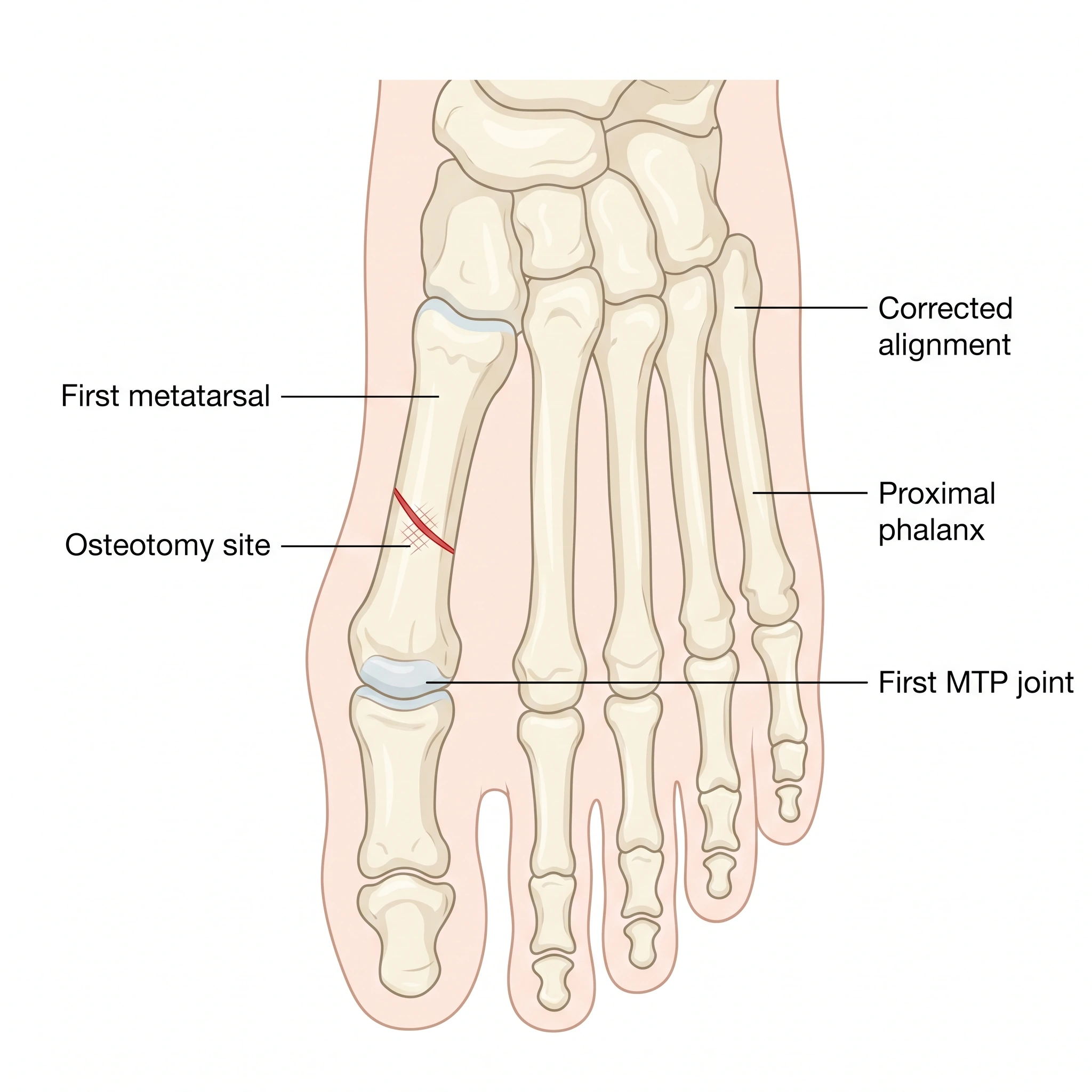
The correction. In many cases the surgeon makes one or more cuts in the bone, called an osteotomy, to shift it back toward a straight line. Osteotomy means a planned cut in bone to change its position. The bone is then held in place with small screws, a plate, or pins. In some feet the drift comes from a joint further back, and the surgeon corrects there instead. When the joint surface is badly worn, the surgeon may join two bones so they heal as one, called a fusion, to remove the painful motion. The soft tissue around the joint is balanced so the toe sits straight.
Closing. The cuts are closed and a dressing is applied. A special surgical shoe or a boot is fitted, and in some cases a splint.
Going home. Most bunion procedures are outpatient, meaning you go home the same day. You cannot drive yourself; a plan for a ride is part of getting ready.
The whole procedure commonly takes about one hour, though this varies with the method and the foot. The surgical team will give you the specifics for your plan.
What is the recovery timeline for Bunion Surgery?
Recovery is measured by what you can do, not only by the calendar.
Everyone heals at their own pace. The ranges below reflect general guidance from the American Academy of Orthopaedic Surgeons (AAOS). These are ranges, not promises.
Milestone 1: protecting the repair (early weeks). You keep weight off or limited on the foot as directed, often in a surgical shoe or boot. The foot is kept elevated much of the day to control swelling. You reach this milestone when swelling begins to settle and the incision is healing cleanly.
Milestone 2: bone healing and more weight. As X-rays show the bone knitting, the surgeon gradually clears you for more weight through the foot. Bone healing after an osteotomy generally takes about six to eight weeks, according to general guidance from the AAOS. These are ranges, not promises.
Milestone 3: back into a normal shoe. You reach this when swelling has come down enough that a roomy, supportive shoe fits without pressing on the incision. This often falls somewhere after the boot phase, but it depends on your swelling, not a fixed date.
Milestone 4: return to activity. Walking comfortably for daily tasks comes first. Return to more demanding activity and sport comes later, once strength and motion return and the surgeon agrees. Full recovery, including the last of the swelling, can take several months to a year for some people, according to general guidance from the AAOS. These are ranges, not promises.
Swelling that lingers for months is normal after foot surgery and does not mean something is wrong. Keeping the foot elevated helps.
Read the full guide to preparing for surgery →
Your own recovery instructions come from the office and are specific to you. This page describes the general course, not a plan to follow.
How should you prepare for surgery?
A little planning makes the first weeks easier.
- Set up a rest spot. Arrange a place where you can sit with the foot raised above heart level. Keep water, medicine, a phone charger, and a book within reach. - Clear your paths. Remove loose rugs and cords. Set up a clear route between your bed, bathroom, and rest spot to lower the chance of a trip. - Plan your transport. You will need a ride home on the day and often for the first week or two while the foot is protected. Arrange rides to follow-up visits too. - Time off. How long you need away from work depends on your job. Desk work with the foot elevated may resume sooner than work that is on your feet. Ask the office for guidance for your situation. - Help at home. Have someone available for the first day or two for meals, errands, and getting around. Prepare some easy meals in advance. - Bathing. Ask how to keep the dressing dry. A shower seat and a waterproof cover can help. - Assistive devices. You may use a knee scooter, crutches, or a walker. Practice with them before surgery if you can.
Which warning signs should you call about?
Some symptoms are expected after surgery, such as mild swelling and soreness.
Others deserve a call. Contact the surgeon's office if you notice the following.
- Fever, or growing redness, warmth, or drainage from the incision, which can signal infection. - Pain that keeps getting worse instead of slowly easing, or pain not controlled by your prescribed plan. - A dressing or splint that feels too tight, or new numbness in the toes. - Toes that turn pale, blue, or cold.
Seek emergency care right away for calf pain or swelling, sudden chest pain, or trouble breathing. These can be signs of a blood clot, which is uncommon but serious. When in doubt, call the office; the staff would rather hear from you early.
What results can you expect from Bunion Surgery?
Most people who have bunion surgery for the right reasons get lasting relief of pain and better shoe fit.
Satisfaction is generally high when the goal is comfort rather than appearance, according to general guidance from the American Academy of Orthopaedic Surgeons (AAOS). These are ranges, not promises.
A few honest points help set expectations:
- The toe may not become perfectly straight, and a small chance exists that the bunion can return over years, according to general guidance from the AAOS. These are ranges, not promises. - Some stiffness in the big toe joint can remain, especially with fusion procedures. - Swelling can take months to fully settle.
Results depend on the method, your foot, and how closely the recovery plan is followed. The surgeon will give you a realistic picture for your specific foot.
What are the treatment options?
- 01Shoe changesShoes with a wide, deep toe box give the toes room. A stiffer sole can lower stress on the joint.
- 02Padding and spacersA pad over the bump or a spacer between the first and second toes can ease rubbing.
- 03OrthoticsThese are shoe inserts, custom or over the counter, that support the foot and spread pressure.
- 04Activity and weight adjustmentsEasing high-impact activity during flare-ups, and managing body weight, can lower load on the joint.
- 05Anti-inflammatory measuresIce and, when appropriate, over-the-counter anti-inflammatory medicine can calm swelling. Ask the office before starting any medicine if you have other health conditions.
- 06Physical therapyGuided exercises can improve strength and motion around the foot.
- 07Thinking about whether surgery is right for you?The office can review your X-rays with you and walk through the choices at your pace. Questions about insurance are answered by the office.
What do patients ask most?
Will my bunion come back after surgery?+
How long will I be off my feet?+
Can I have both feet done at once?+
Does insurance cover bunion surgery?+
Is the surgery painful?+
Can I just remove the bump without the rest?+
Trained at Adventist Health White Memorial, Los Angeles (three-year foot and ankle surgical residency, Chief Resident). Sees patients in Fort Lauderdale.
About Dr. Tine →